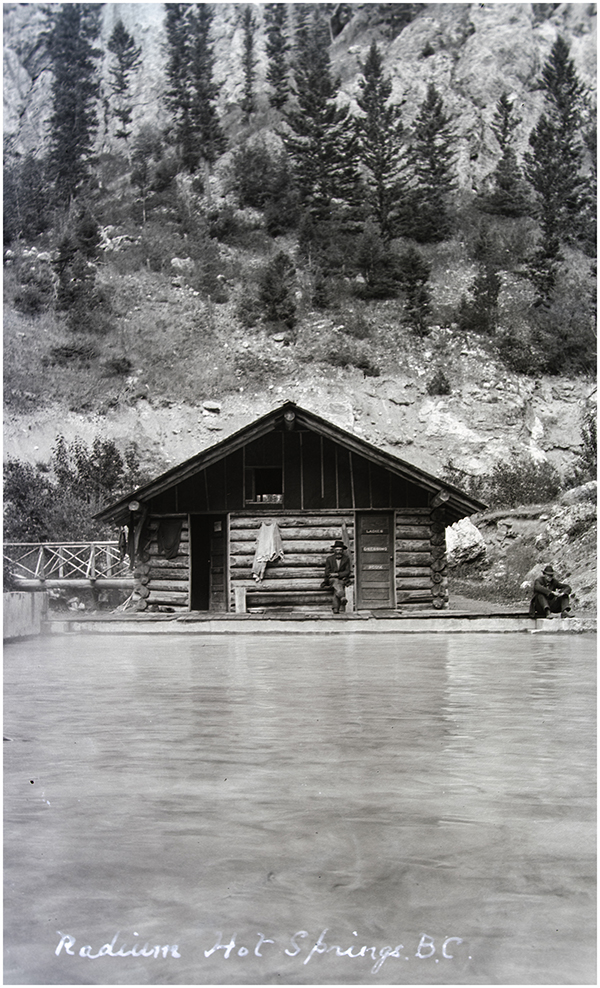
I have started on a project I have been wanting to do for some time. My parents left me a large collection of historical photographs, most dating from the 1920s and 1930s. All of the images exist only as negatives, with no printed positives, which makes it difficult to assess their quality or even know exactly what they depict. Until they are digitized, much of the collection remains effectively hidden.
The photographs are from various photographers, but many are attributed to A.E. Fisher, one of the first photographers in the area. The negatives measure 3.25 by 5.5 inches and contain exceptional detail. Many are beautiful images of the region and its people from a time before the area was widely populated. Included in the collection are approximately 110 negatives of First Nation people.
I have worked with these First Nation negatives in the past to ensure the Ktunaxa Nation received digital copies for their archives. Many of these images are both striking and historically important, documenting a period for which relatively few photographs exist.
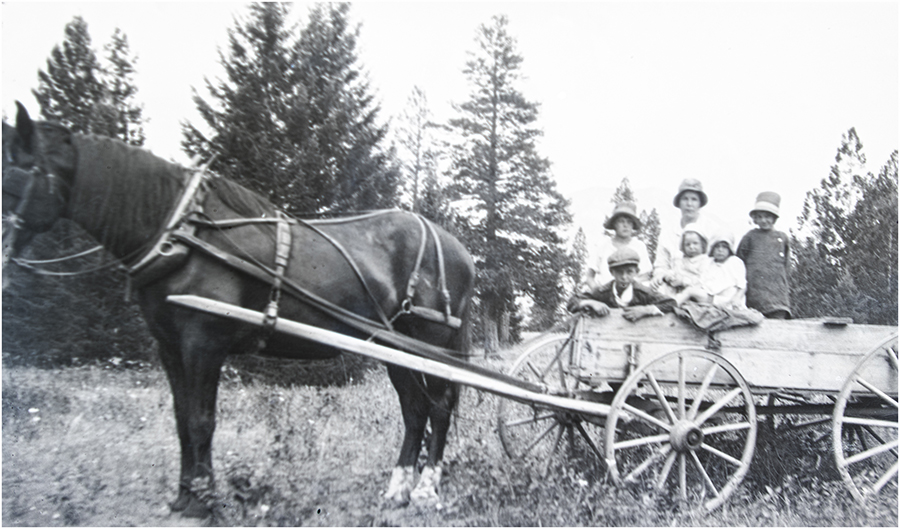
One of the main reasons I put this project off for so long was the amount of time required to digitize the collection. Using a flatbed scanner, each transparency scan takes a significant amount of time, followed by additional processing of the digital file. To speed things up, I developed a more efficient workflow by photographing each negative on a light box using a digital camera. The files are then cropped and reversed into positives in Photoshop, where I also make minor corrections. The images are then downsized and imported into Lightroom, which provides robust library and archiving tools. At this stage, descriptions and keywords are added to make the images easily searchable.
The resulting files are not necessarily intended for high-end printing—although decent prints could certainly be made—but rather to create a practical, accessible archive for future use. Once digitized, the original negatives are filed and labeled with corresponding file names. If a high quality large print was needed the original negative could be accessed and scanned.
Each negative now has an associated digital file that can be searched on a computer and includes information such as photographer, location, and subject matter. This allows the images to be used for research, storytelling, and printing while protecting the original negatives from further handling and deterioration.
It is a large and time-consuming project, but a worthwhile one. Already, I have uncovered photographs that are both fascinating and historically significant—images that may otherwise have remained unseen.
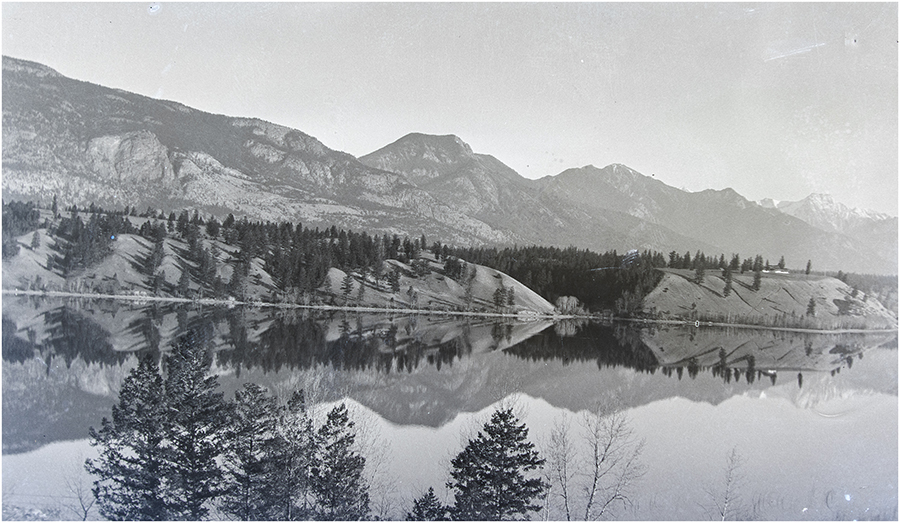
This shows the east side of Lake Windermere before development.
 Palliser Pass
Carol A. Hand
Fascinating, and such an important project!
LikeLike
underswansea
Thank you Carol! It is interesting to see the old photos come to life. Take care. PS Missing your writing.
LikeLiked by 1 person
Anonymous
Amazing project!
LikeLike
underswansea
Thanks! It has been fun looking through the old negs.
LikeLike
Jim R
I think you have a very good plan of attack. It will take a long time. But, future projects and viewers will appreciate what you are doing.
Good for you.
Jim
LikeLiked by 1 person
underswansea
Thanks Jim! The project is long overdue.
LikeLike
mountaincoward
That 3rd photo is superb quality – I notice the photographer seems to have a tilt on though – most of my photos are tilted when I get them back from the processors – they look straight to me when I take them but they’re not – one of my eyes must be higher than the other!
What a great project though. I have to say I enjoy scanning my film prints and find it a relaxing occupation – and it’s just great to see them come out on the screen all nicely back-lit – gives them much more life than on paper.
I had a quick google of A E Fisher as I recognised the name – we have an author from Grimsby called that but it can’t be him as he was only born in 1997!
LikeLike
underswansea
Yes, some of the pictures are crooked. They also have watermarks, dust and pinholes. These could all be retouched. I laughed at your uneven eyes. I also have a hard time keeping the horizon level.
I also find scanning and retouching very relaxing. Time flys by.
A.E. Fisher came to Canada from England in 1912. He wasn’t a well known photographer apart from locally.
LikeLike
mountaincoward
I’ve definitely heard of Fisher – and not the one born in the 1990s…
LikeLike
Julie@frogpondfarm
What a fantastic project Bob! How exciting and no doubt it will be fulfilling! Sounds like you are going to be busy ..
LikeLike
underswansea
Hi Julie, it has been a good project, but it will be a while before it is completed. Good to hear from you.
LikeLiked by 1 person
Julie@frogpondfarm
Always good to hear from you ..
LikeLike