Rock and Snow

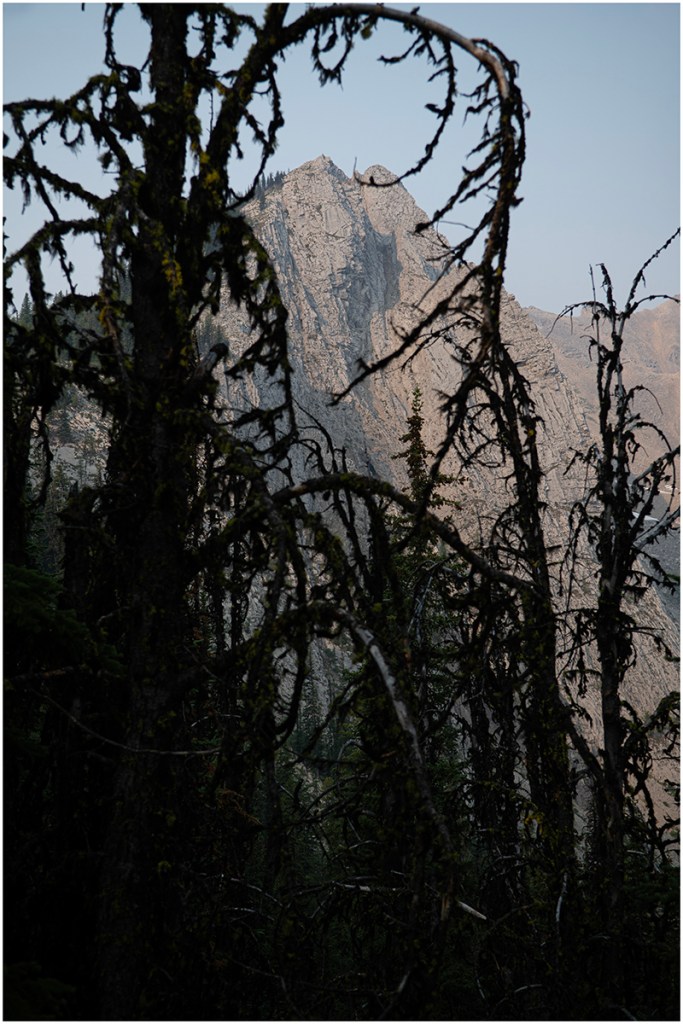
A change of plans today. Originally, I was going to hike with Cooper and Scarlett, but the smoke was very bad. Since my heart was set on seeing some rock and snow, and my pack was already loaded with a couple of treats, I set out alone.

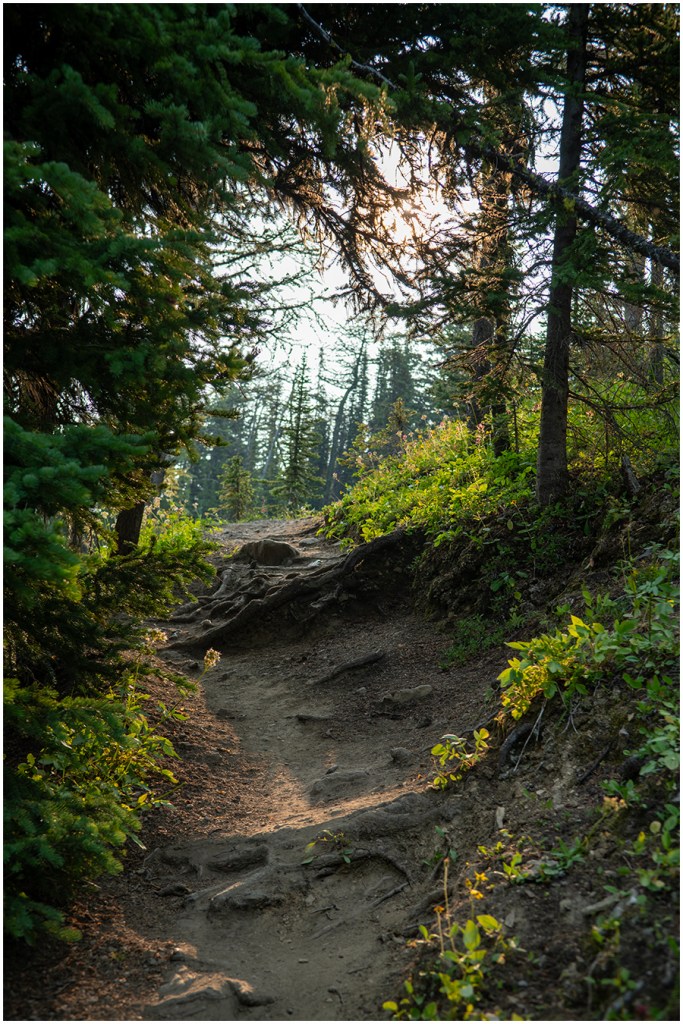
This mornings sun filtered with smoke.

The sun came up red at 7:30. Luckily, the trail started in the cool bush and climbed quickly. It always seems to take me an hour or so before I work the kinks out and start to feel comfortable. I spotted a lone black bear cub that scattered quickly into the trees. This is the second one I’ve seen this year without its momma around. Hopefully, she was just off in the bush.

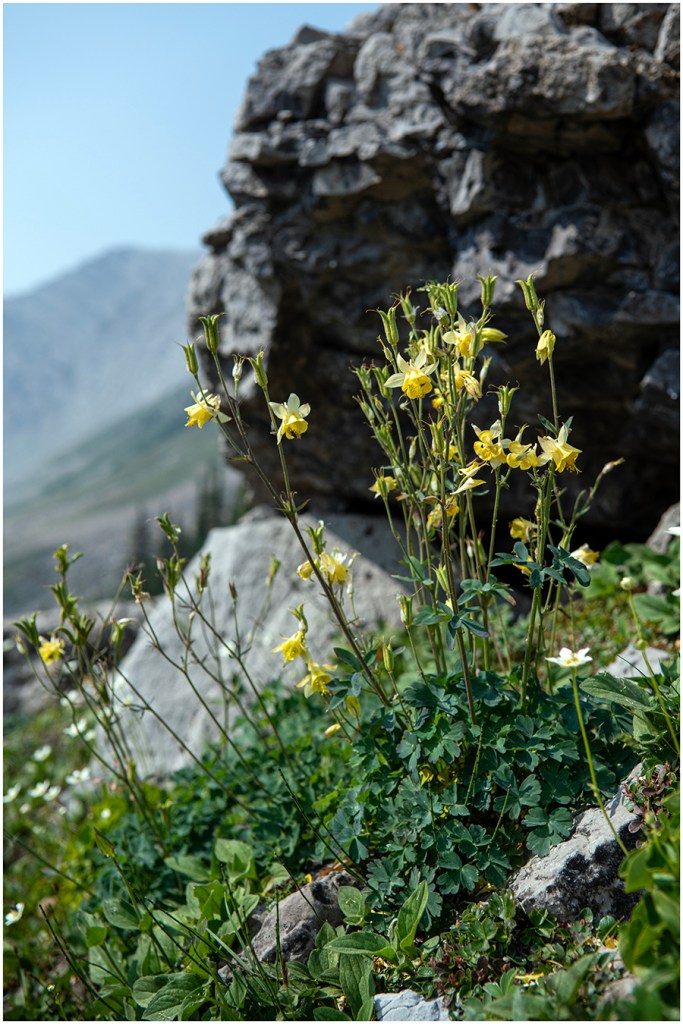
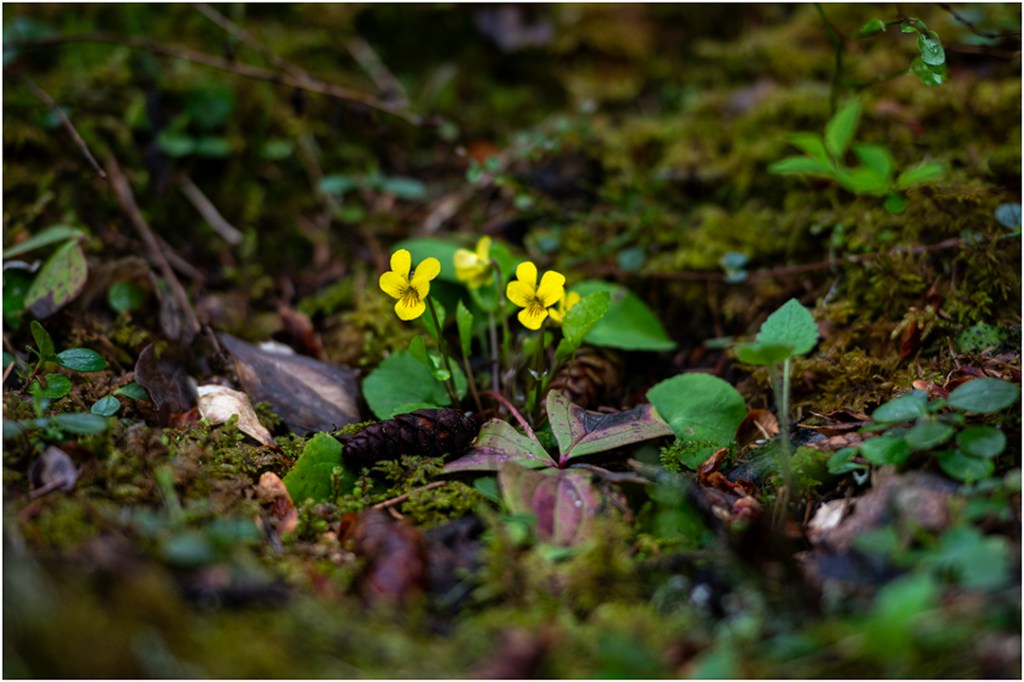
The wildflowers were abundant on the slopes and along the trail; paintbrush, columbine, fireweed, potentilla, violets, white pasque flowers, mountain forget-me-nots, and many others.

The pikas let me know I was intruding once I’d made it into the alpine, while buntings and creepers followed me through the forest. The smoke cleared somewhat at the higher elevation. Looking back down, I could see just how thick it was below. Definitely not a day for the kids.

Rising above the smoke on the trail.

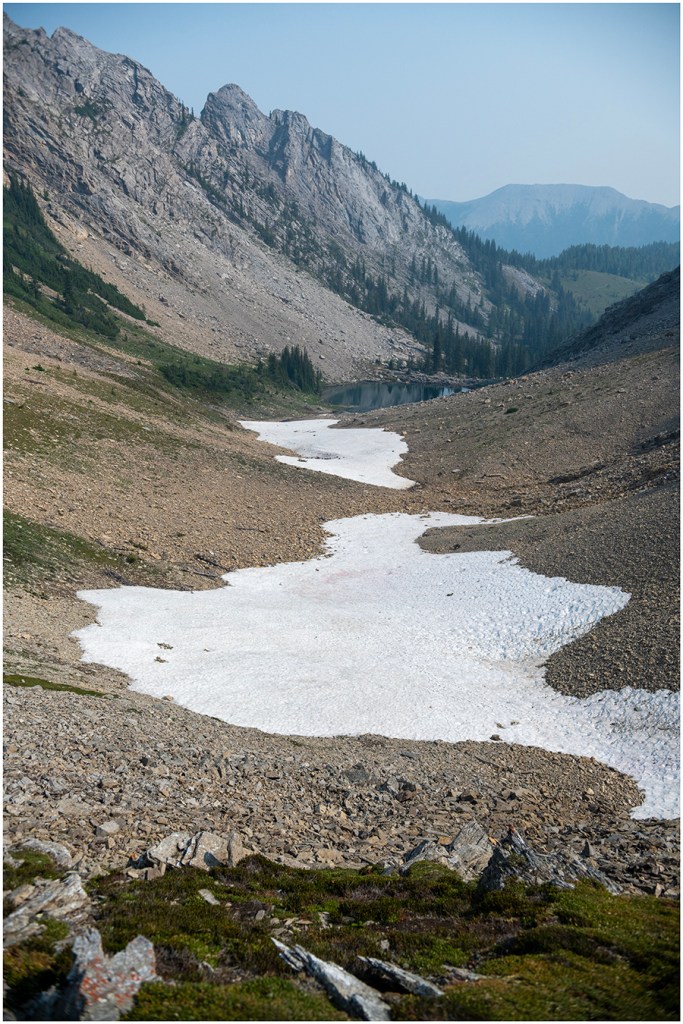
I opted for the back of the basin, keeping close to the mountainside where there was at least a little shade from the sun.

There was still snow in the basin. Being August, perhaps it will remain all year, something I haven’t seen for many years. I always think that if a little snow remained each year, it wouldn’t take long to build the glaciers back. When I say “not long,” I mean geologically speaking, hundreds or thousands of years. The moraine I crossed was once covered in ice. Before that, it lay beneath an ancient ocean. Cracking shale in this area often reveals fossils of sea creatures from that distant time. The Rocky Mountains are full of places like that.

The snow felt good beneath my boots, and I promised myself I’d walk across it on the way back instead of picking my way down the loose rock, which is tough enough going up.

I reached the back of the basin at about 11:30. Time to pissass around, as my father used to say. I wandered among the rocks and flowers and found a small tarn the melting snow had created.

Once I stopped moving, I could hear voices.

There was no way anyone else would be up here. From this perch I would have seen anyone coming or going. I stood perfectly still, slowed my breathing, and there they were again. They were far enough away that I couldn’t make out what they were saying, but they were voices nonetheless.

Or so I thought.

This went on for a while.

Finally, I stopped once more and calmed my breathing. There they were again, faint, as though carried from somewhere in the distance. I held my breath, trying to catch a word.

The voices stopped.

I started breathing again, and they started up.

Damned if it wasn’t a wheeze in my chest that sounded exactly like distant conversation. Perhaps the smoke was worse than I thought, and the quick ascent had caught up with my lungs. That gave me a good laugh.

Not my favourite to walk on.

As promised I stayed off the rolling rocks on the way down. The sun was unavoidable by then, but it felt good as I crossed the lingering snow. From there I retraced my route through the rocks, into the bush, and down to the creek bottom where I’d left the truck.

Very fine day.

Columbine

Tamarack

Mid July

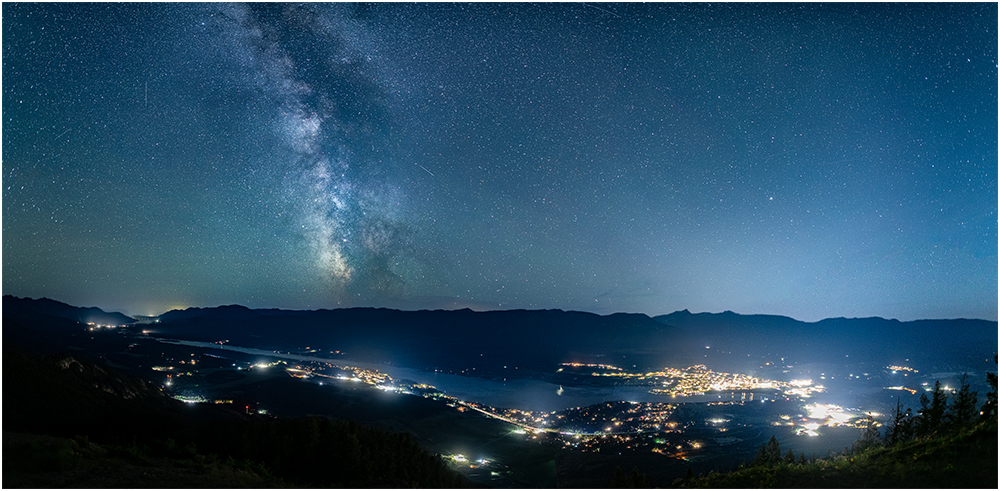
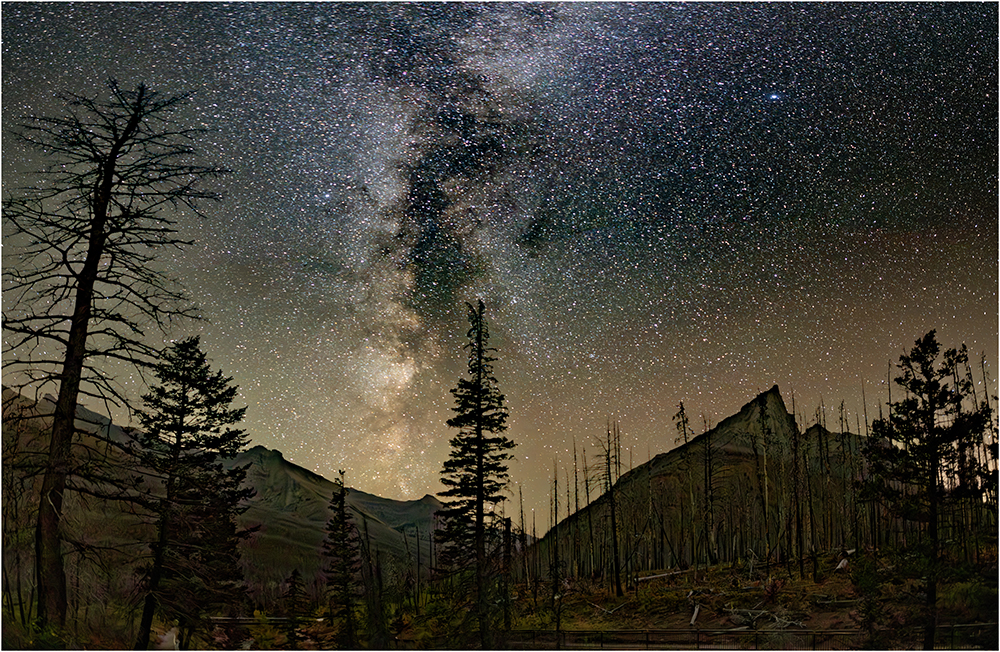
The bright light of Invermere compete with the Milky Way.

There was a time when we used to run up Mt. Swansea and spend the night in the fire lookout. We challenged each other when we were teenagers. Usually booze was involved, as it seemed to be in just about everything if you grew up in the valley.

That lookout could get cold. I remember one of our drunken ascents, waking up freezing in the morning. My friend had wrapped himself in a sheet of plastic he’d found. At first glance, I wondered if he had suffocated himself. Luckily, he’d left just his nose uncovered so he could breathe.

The fire lookout had a mounted scope and a large map of the entire area spread across a table in the middle of the room. If the lookout spotted a fire, they would locate it on the map and radio in the coordinates. The lookouts don’t exist anymore. Satellites, helicopters, and GPS have taken their place. The one on Swansea was dismantled long ago.

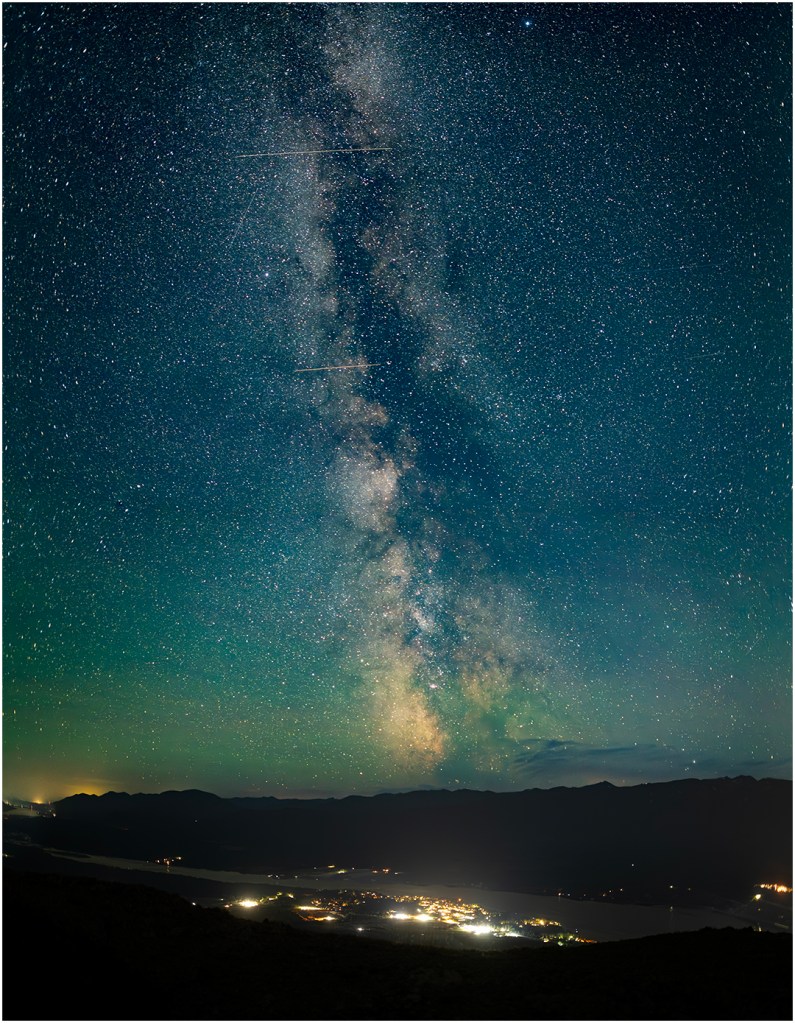
The Milky Way through the smoke rises above the Town of Windermere and Lake Windermere.

Tonight, I drove most of the way up and hiked the last section to the summit. The mountain is used primarily for mountain biking now, and I rarely go up anymore. But I figured it would be quiet in the middle of the night, and I was right. There were only rabbits and one owl that silently flew across the trail in front of me, giving me a start just the same. Willow would have taken exception to that.

At the top, I took a few photos from the spot where the lookout once stood. There are definitely more lights now than when I used to run up here. It was a young moon and had set much earlier. There was some smoke and a few low clouds, but otherwise the viewing was good. The lights washed out many of the stars, but the Milky Way could still be seen clearly.

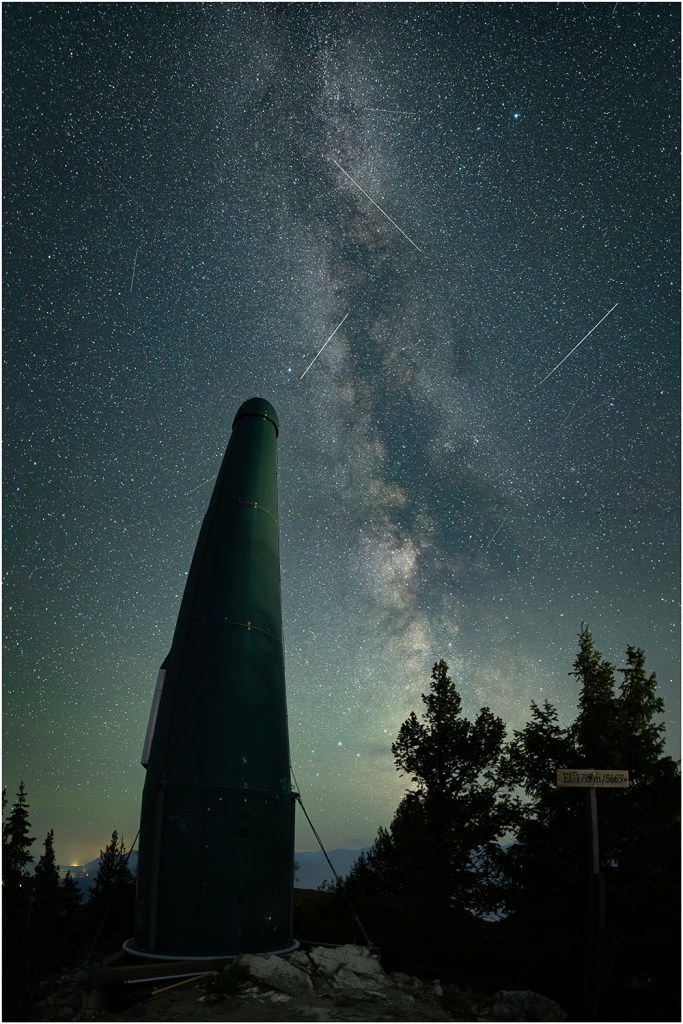
Ready for take off. Several satellites cut through the galaxy.

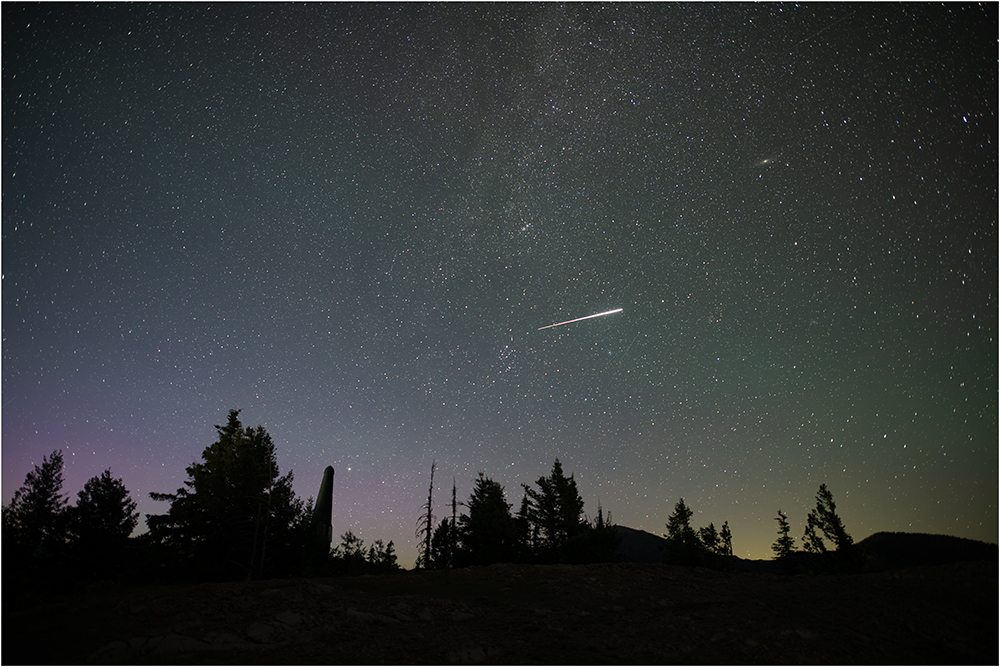
This may look like a meteor near Perseus, however it is either the International Space Station or the China Space Station. The streak is the distance it moves during the 20 seconds the camera shutter is open. It started very bright then faded.

Mid June

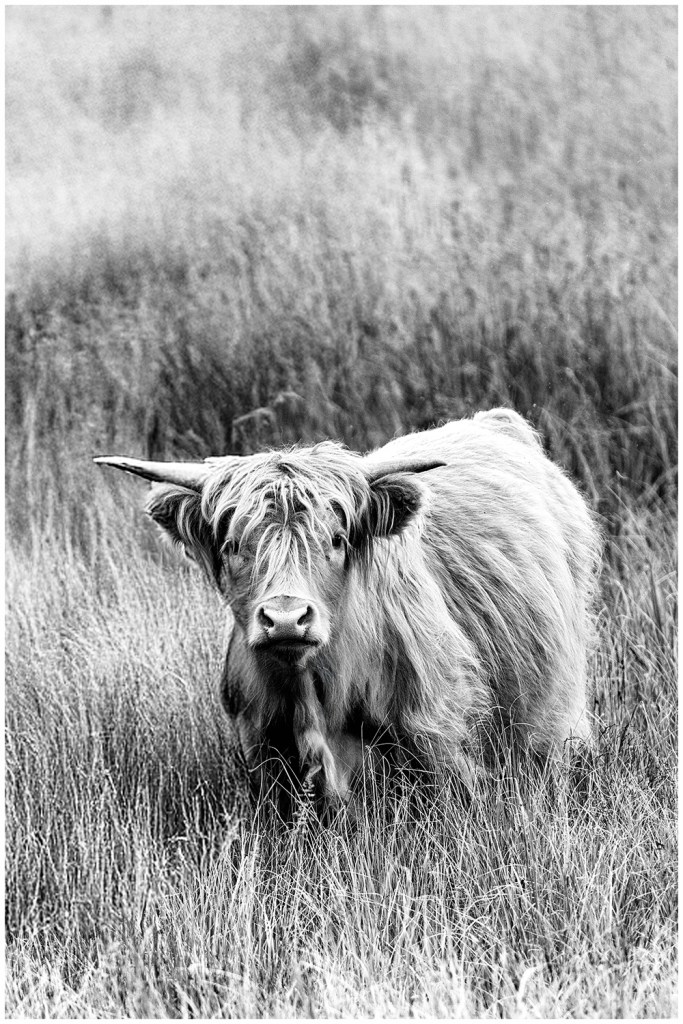
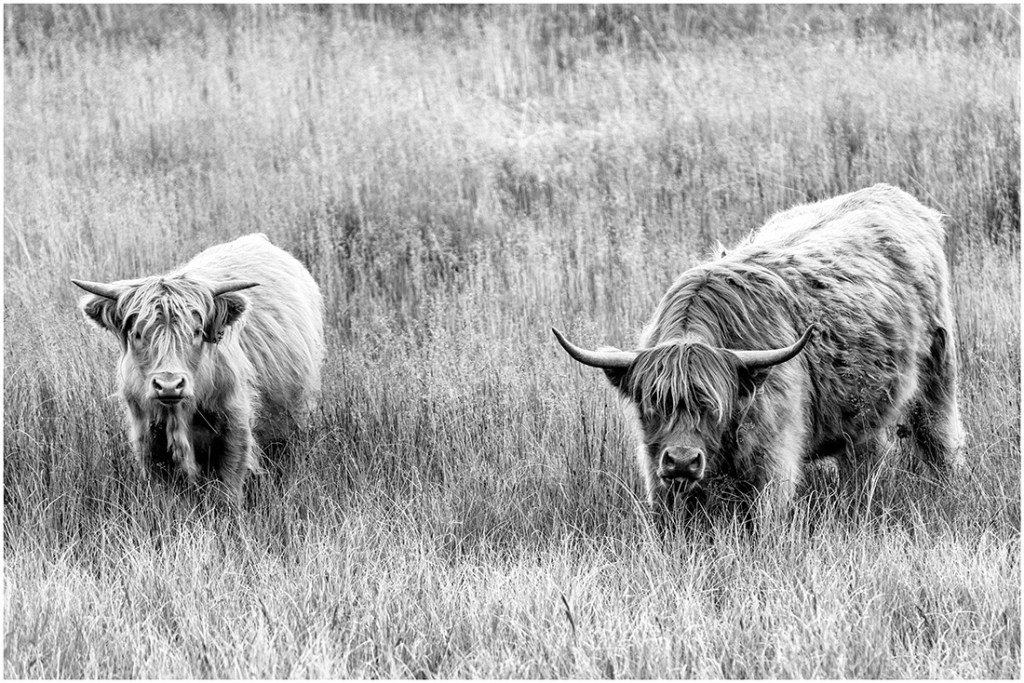
A Highland Cow enjoying the abundant grass.

The garden is on the verge of catching hold. The cucumbers have not enjoyed the rain but are still hanging on as are the tomatoes. Not exactly flourishing though.

A few things came up very spotty. Beets and lettuce for instance, strange as they usually come up like gangbusters. I did use old seed, perhaps that made a difference.

The starlings have vacated the hole in the top of our tree. With the foliage out in full force one could hardly see the hole. The young ones have learned to fly and flown the coop.

My trips in the bush have not been as frequent. Still missing Willow. Lisa has been trying to track down another Wire-Haired Standard Dachshund but they are hard to come by. They are much more popular in Europe. I have joked that I’m going to go to Poland to get a hound. Our Wire-Haired before Willow, Slinky was from Poland. She was also a fantastic dog.

Here are a few pics from June.

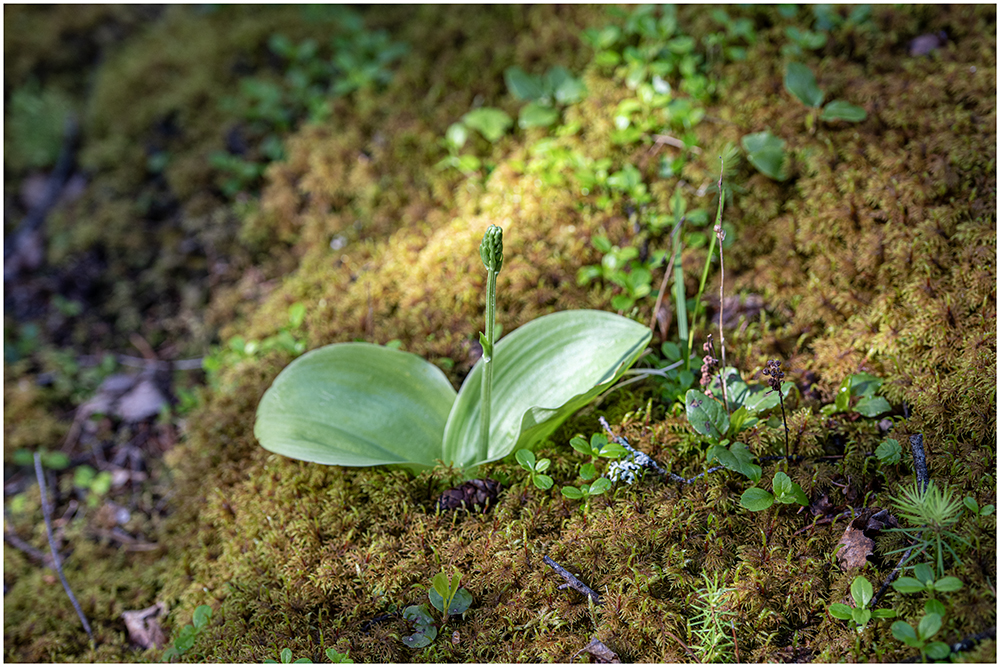
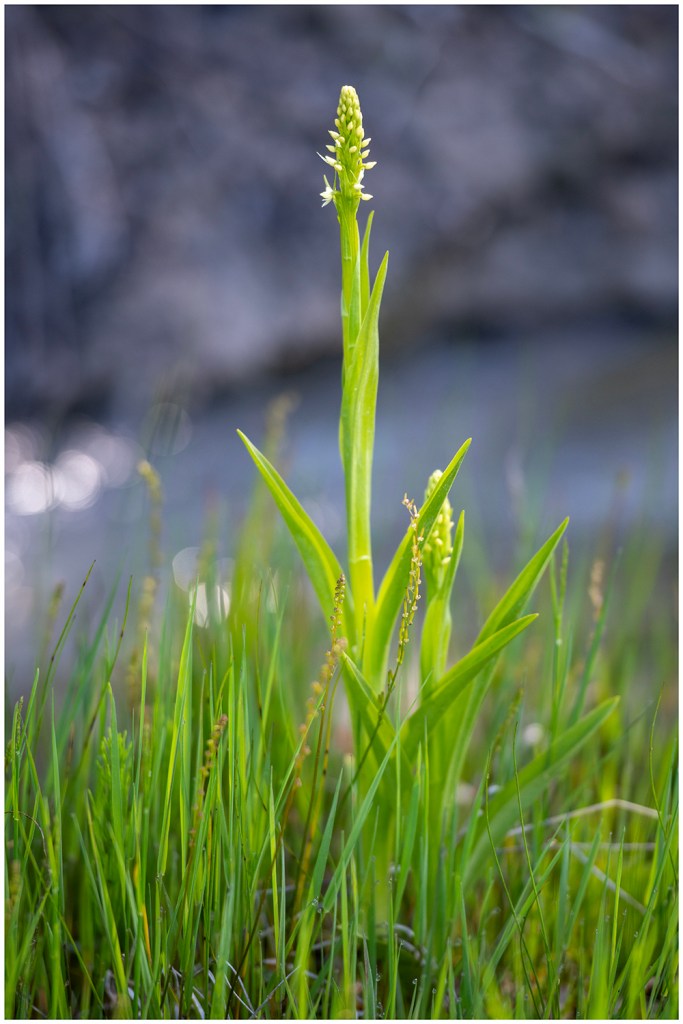
A Roundleaf Orchid. I returned to this orchid recently to get a picture of the flowers open and it had been munched off. Flowers are a favourite of bears. There was plenty of sign to confirm this suspicion.

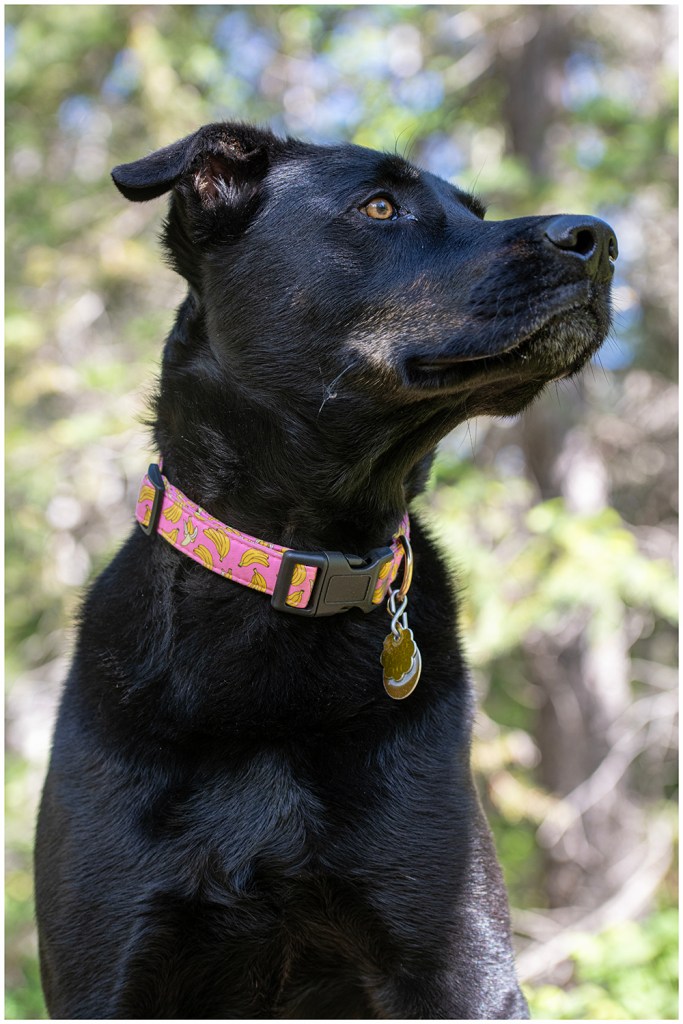
Lola helping me find Orchids along the game trails.

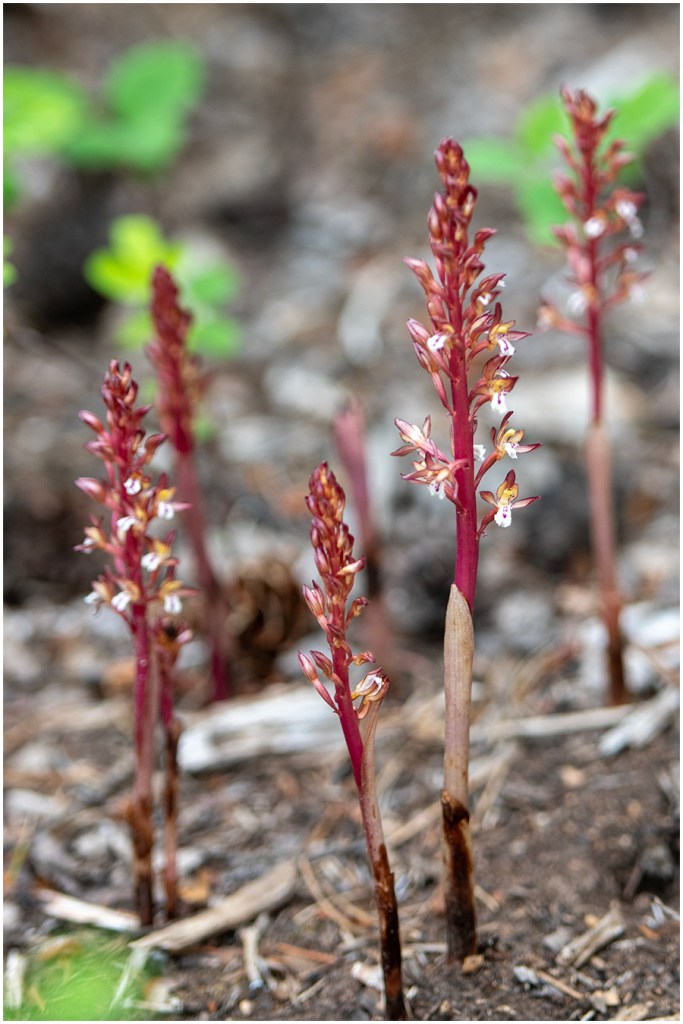
Coral Orchid. These were everywhere and reminded me of Asparagus.

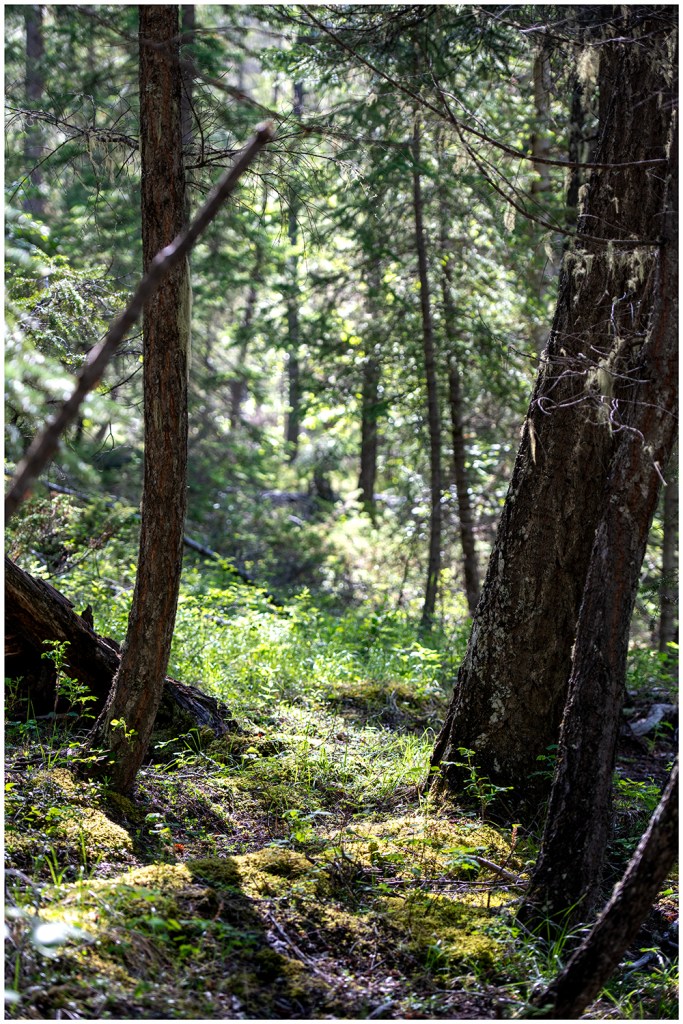
Following a game trail. I often followed game trails when I was young, hunting, but often, just trying to learn from the animals. Where they were going, what routes they chose, where they would dip down for water or rise onto the mountain side, the tracks they left and which animals shared the route. My young self figured they knew the bush better than us, so why not learn from them. Older now I have trouble managing the deadfalls.

Bog Orchid.

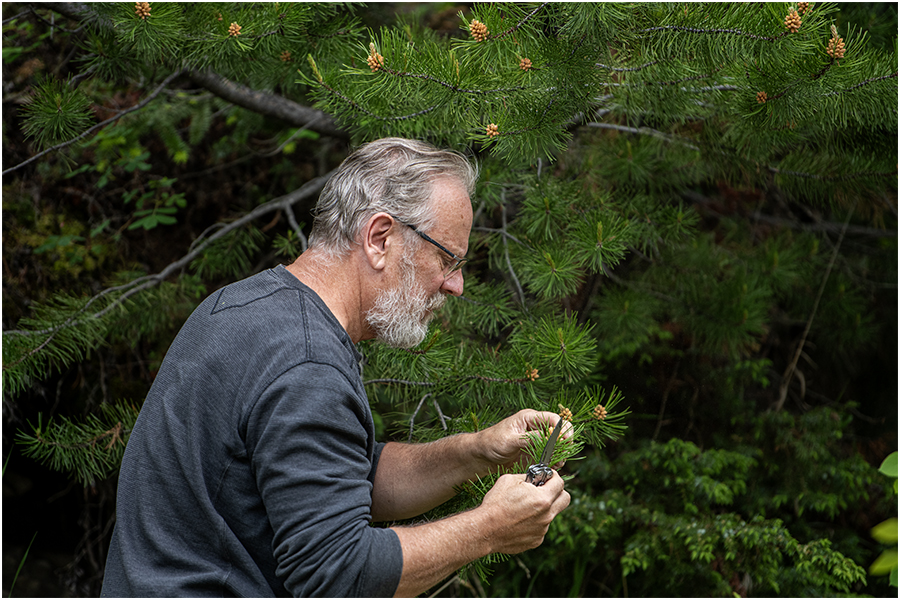
An Oldtimer harvesting pine pollen. This was taken on a walk with Lisa, Cooper and Scarlett. The kids asked what pine pollen is good for. I told them it was good for the immune system and can even be used as an aphrodisiac. Cooper wanted to know what an aphrodisiac was, Lisa said it can give a man an erection. Cooper’s response was, “Why would somebody want more of those.”

Wood Frames & Wild Orchids

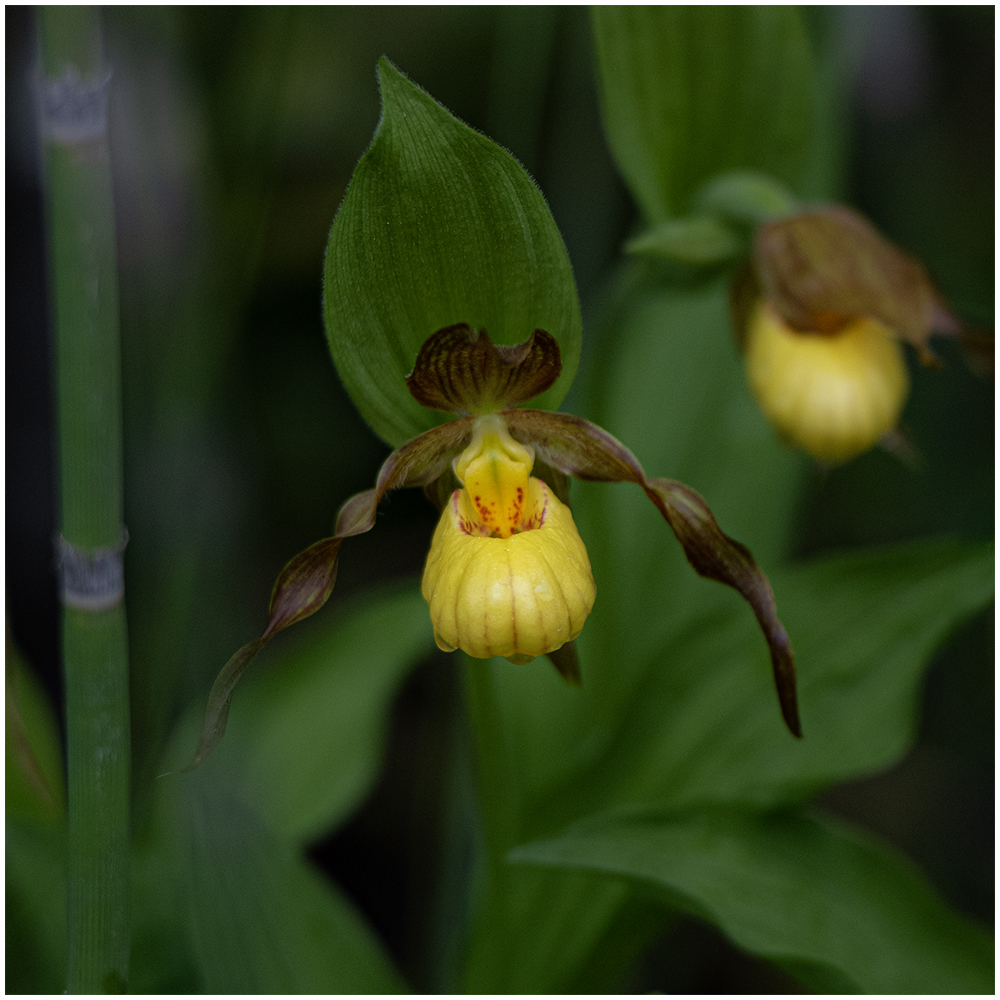
Yellow Lady’s Slipper (Cypripedium calceolus)

My mother used to enjoy going to garage sales. She would find all kinds of treasures, some of which she would pass along to me. There were books she thought I would enjoy and old picture frames that I liked restoring. She had a great eye for a bargain.

Recently, I found an old wooden frame. It still had its original glass. The picture and mat inside had been badly damaged by water and could not be saved, they crumbled when I removed them. The frame, however, was still solid. I removed the rusted finishing nails that held the picture in place, along with the old hanging wire and the glass. The glass itself was old, with a few air bubbles trapped in it from when it was made. After a good cleaning, it was almost like new again, although it retained the slight tint that old glass often develops.

The frame was made of oak and had originally been stained black. Over time, the stain had weathered, allowing the grain to show through. That aging is exactly what I like to preserve. It is amazing how well some old frames were built. For one thing, they are made of solid wood.

After cleaning the dirt from the grooves with a toothbrush and giving it a very light sanding, I rubbed it with tung oil. This really brings out the patterns in the wood and helps nourish it. You can almost hear the wood saying, “Thanks!”

I’m not sure what I’m going to do with the frame once it’s ready for its new life. I’ll have to think of something.

***

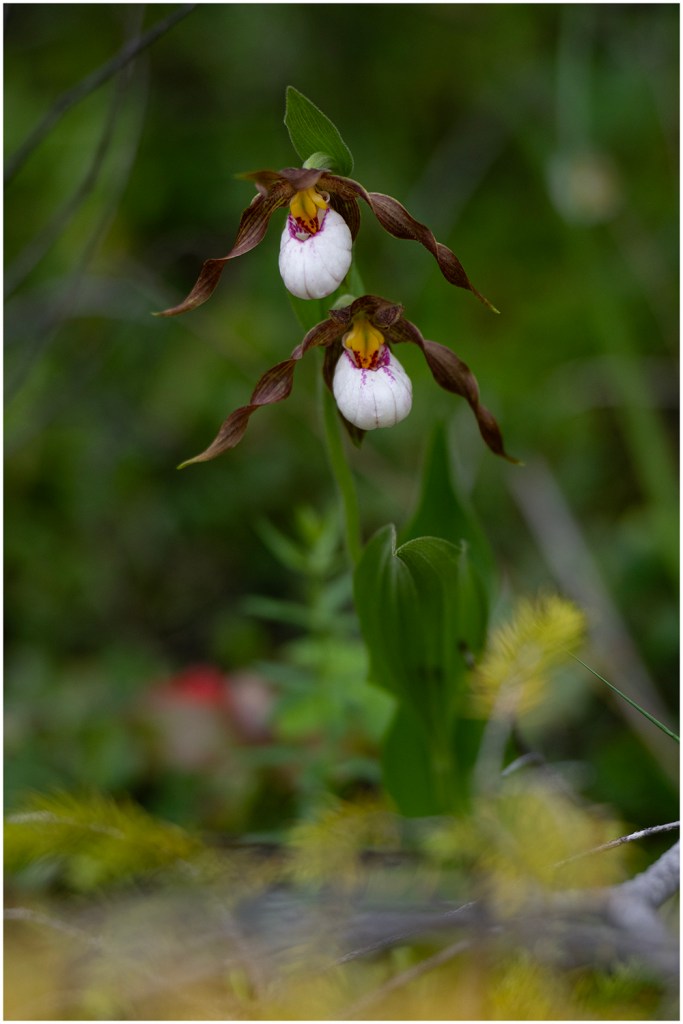
Mountain Lady’s-Slippers (Cypripedium Montanum)

Lisa and I were poking around up the mountain the other day and spotted a few yellow lady’s-slippers and some mountain lady’s-slippers. They are right on schedule and seem to be enjoying the rain we’ve been having. These photos are from that outing.

How High’s the Water, Mama?

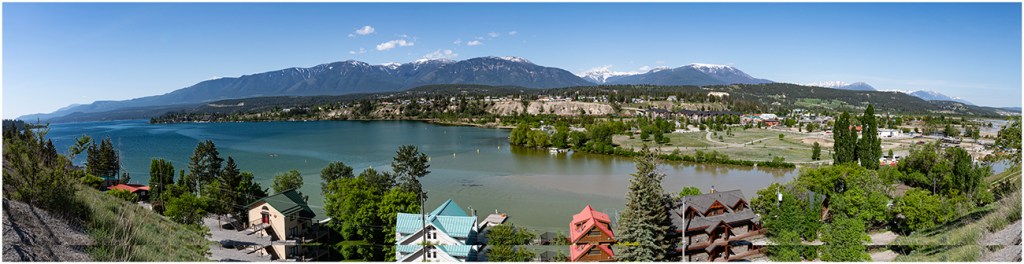
The mouth of Lake Windermere. The brown water from Toby Creek can be seen backing up into the blue water of Lake Windermere. Picture taken on May 28th, 2026 before the rain started.

We have had a good dose of moisture starting about a week ago. It has been nice. The grass is knee deep. My plan was to mow it today, as the rain looked like it was going to stop, but overnight it started again.

Yesterday, I hilled the potatoes. Everything is up in the garden and enjoying the moisture. Once the sun shines, everything will take off.

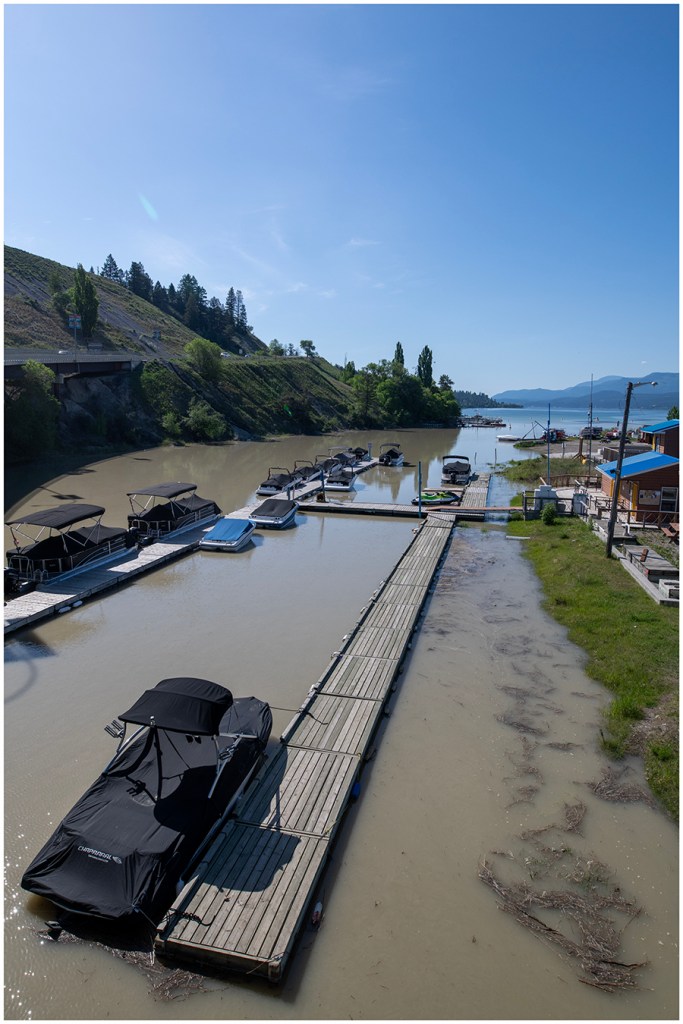
These pictures were taken a week ago. They show the Columbia River leaving Lake Windermere. As often happens at this time of year, when the mountain snow melts and we get rain, the river flows backwards into the lake.

This is caused by Toby Creek backing up where it enters the Columbia about a mile to the north. The course of Toby Creek has been altered over the years to help prevent flooding in Athalmer. In the past, Toby Creek would rush out of the mountains and create an alluvial fan stretching from the mouth of Lake Windermere to well below where it enters the Columbia today.

Standing on the benches above Invermere and Athalmer, one can almost see where Toby Creek once spread out across the valley. It was in this area that salmon spawned before dams blocked their passage from the Pacific Ocean.

The Columbia River flowing backwards is a reminder that nature cannot be denied.

There have been several instances over the past decade when Invermere’s sewer system has struggled at this time of year. Panorama has also experienced problems with its wastewater system. Both systems discharge treated wastewater into Toby Creek.

A couple of years ago, I wrote to several District of Invermere officials expressing concern that untreated sewage could potentially flow into Lake Windermere when the river backs up. The fact that untreated sewage could enter a river is troubling enough. I specifically mentioned the possibility of it backing into Lake Windermere because the lake is viewed as central to the region’s tourism economy, and tourism appears to be what attracts the attention of local decision makers.

However, I received no response. Not a word. Other than what I viewed as an attempt by District of Invermere Council to assassinate my character and make my views illegitimate. https://palliserpass.ca/2023/06/17/mid-june-2/

We are blessed to live at the source of the Columbia River. Over the years, we have changed it to meet our needs. Many of those changes have been devastating to its natural flow, its native species, and the Indigenous peoples who relied on its life giving gifts for thousands of years.

Today, it sometimes seems our primary goal is simply to keep Lake Windermere clean enough to support tourism, large wake boats, and the second home market.

Instead, each of us who lives here should consider ourselves a guardian of the land. Of course, every one of us leaves a footprint, and every footprint has consequences. But why take more than we need?

Some things are more important than growth and convenience. The lakes and rivers that sustain us are among them.

Searching

Everywhere we looked, animals were ducking for cover, which was essentially what we were doing. We got higher than we’d been since November. The clouds quickened. A rabbit jumped off the trail. Squirrels had left their cones shredded on the deadfalls. A small falcon tested the wind, curious enough to hang around and get a good look at us. Several light-coloured swifts flew like bullets through the timber. They must have an amazing navigation system. Thrushes, robins, and juncos scattered, disturbed by the two of us early on the trail.

And the quiet was wonderful, exactly what the ears needed.

We stopped below a rock bluff with a view north. The valley bottom was long gone. We could see storms forming above Baldy, sheets of misty rain rolling closer while the clouds directly overhead kept flowing north. A great collision, perhaps. Would the rain get through?

We spotted a large black bear below, near where we had come from. It was accompanied by a few crows and several grey jays perched on the top spikes of spruce and pine. We kept our eyes on them as they turned back down the mountain. We wished them peace, and for them to stay hidden, the same wish for ourselves.

The northern clouds won. Hail and snow started to fall. It wouldn’t last; it was spring after all, and blue sky was already showing through.

***

The other day I was cut off by a tourist in a shiny little sports car with all its windows tinted black. All the stuff I had on my seats ended up on the floor when I slammed on the brakes. If Willow had of been there she would have crashed into the dashboard, which she has done before on similar occasions.

I cursed, not at the driver, who had long sped off, but at this reminder that we are again on the verge of another busy tourist season.

A Kick in the Groyne

The Akisqnuk First Nation, which is part of the Ktunaxa Nation, has recently opposed a couple of projects regarding Lake Windermere.

The first was dredging a portion of the lake to create a boat marina at Thetheway Beach. Thetheway is a vacation home area in Windermere. The new boat docks would be for the exclusive use of Thetheway residents, most of whom are from Alberta.

The second is the refurbishment of a boat launch at Athalmer, located on District of Invermere property. At one time, the District considered buying a crane to expedite putting boats in the lake. That’s probably still coming.

The general consensus among many residents is that there are already too many jet, motor, and wake boats on Lake Windermere.

The Akisqnuk First Nation’s stance is that there is a state of lawlessness on and around Lake Windermere. Docks and boat launches are being built off the ever-growing number of lakeshore second homes. Buoys are being placed along the shores to moor motorboats. There is also the claiming of shoreline ownership by many second-home owners, even though land up to twelve feet above the high-water mark is designated as public. In addition, there has been the takeover of public rights-of-way to the lake by homeowners.

These homes along the shores of Lake Windermere are worth millions and are mostly owned by people from out of province who feel entitled to do as they please.

The District of Invermere is very much in favour of this takeover by vacationers of Lake Windermere, as they reason it brings money into the valley. Since the District’s mayor and councillors are made up of people who own businesses, I can understand why they would want to support the agenda of second homeowners as it puts money in the pockets of businesspeople, and they are, above all, who they represent.

Also on the agenda is the potential removal of the rock groyne at the mouth of the Columbia River at the north end of Lake Windermere. Every year, at least a few expensive motorboats are damaged when they run into it, even though it is clearly marked.

The groyne has been there since the 1800s, and it is unclear what its purpose was. It could have been to deepen the channel to make boat passage easier, or it may have been used for fishing when salmon spawned in the area. It may also have been built to prevent Toby Creek from changing the channel.

Regardless, boaters and the District want it gone.

I am glad the Akisqnuk First Nation has stepped in. Someone has to try to protect the lake from this kind of unchecked development.

Snow

About 8 inches of wet snow fell last night. The roads turned slick. We were due in Calgary, but decided to reschedule.

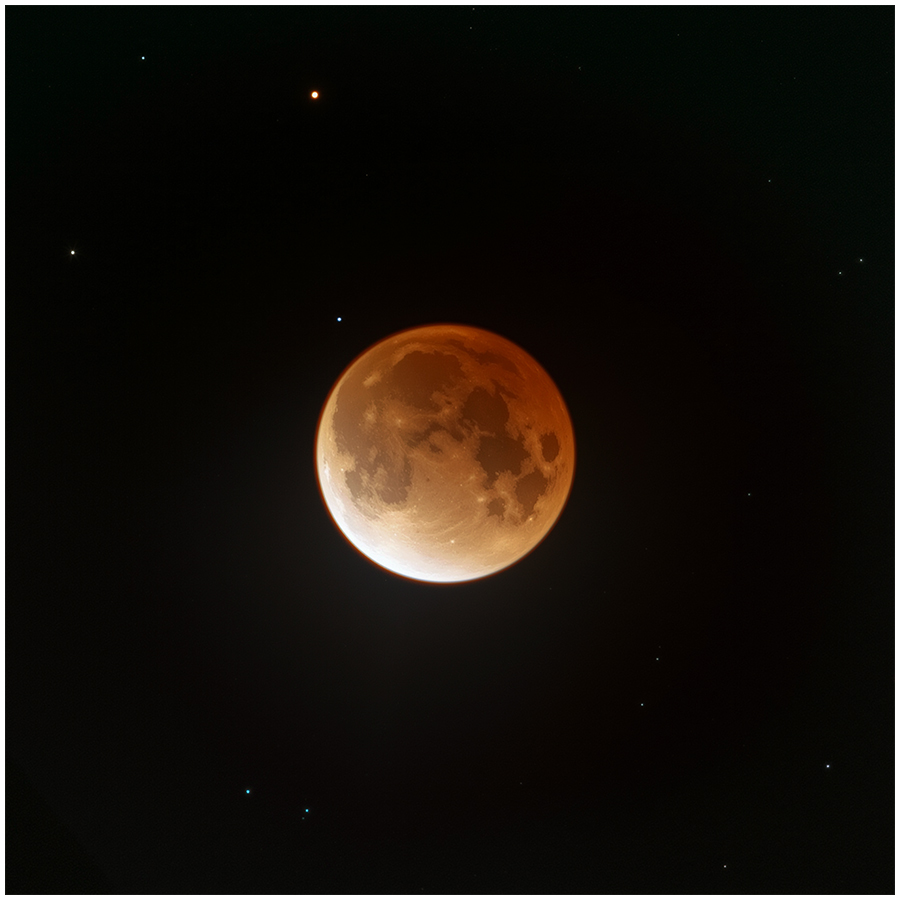
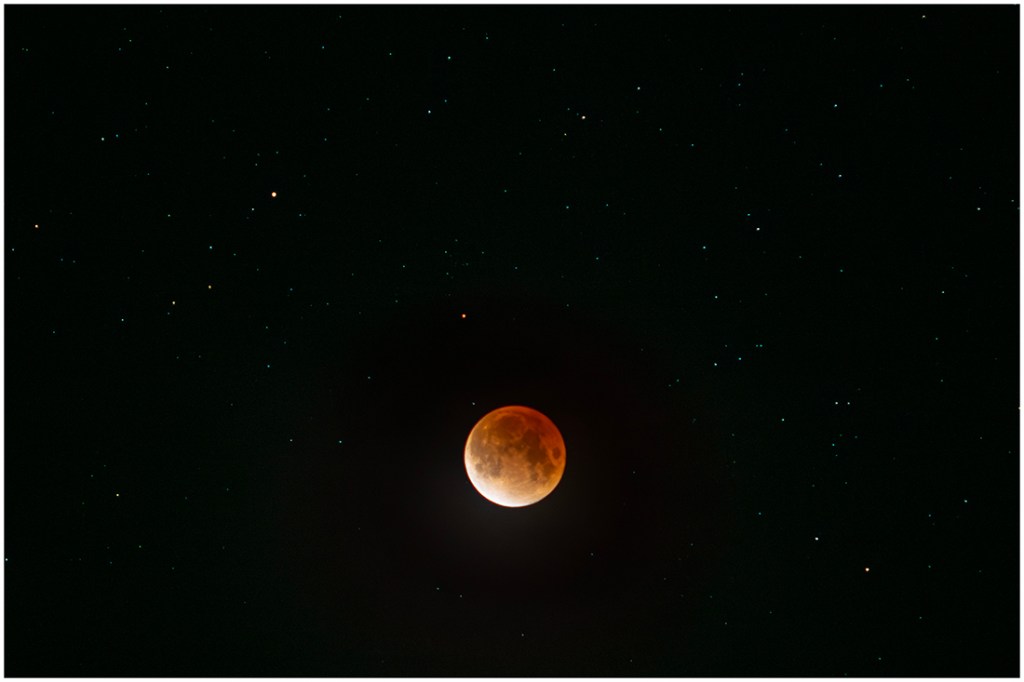
I have included another couple of pictures of the eclipse. I was happy to be able to capture some of the stars around the moon, usually impossible during a full moon as its shine drowns them out. Regulus can be seen above the moon and several stars from the constellation Leo.

***

I changed the oil and filters in my truck yesterday. I haven’t done that in a real long time. I usually take the truck down to Cranbrook an hour and a half down the road for service. People ask why I don’t get it serviced closer to home. The answer is: I’ve always done this. At one time I knew most of the mechanics in the valley and I didn’t want to dislike them. Mechanics are notorious for fucking up and it’s never their fault. Granted they have to keep up on ever changing technology and it can’t be easy. So I drive 150 km out of my way. That way if I’m pissed off at the quality of the work it is at a place out of sight and not at a mechanic I play hockey with on Sunday night, or see at the school picking up their kids.

Now, I have to admit, it probably cost me more to change it myself. First, I bought synthetic oil and a good quality filter.

Second, I had to make a trip to the hardware to buy a six point 15mm socket because the goddamn oil plug was in so tight. The wrenches I had were twelve point and I didn’t want to round off the plug, or I would have been going to the mechanic for a real big bill, and the mechanic would not have spared me from letting me know what a fool I was.

Third, I checked online to see where to take the old oil for recycling. The first place I took it wouldn’t take it, the second place said they stopped taking it. So I drove it over to the landfill who said they don’t take it, but gave me the name of a place that did, and surprise, an hour and a half later and a few litres of Trumps expensive gas, I finally got rid of it.

And fourth, my pants and jacket become thoroughly dirty from lying on the ground, requiring me to spend more time and detergent washing them. Actually, I’ve kept them hidden waiting for a good time to show them to Lisa.

So there you have it, done in by my own hard headedness. Which is a common occurrence.

Eclipse

We were very fortunate to see the lunar eclipse on the morning of March 3rd, especially considering how cloudy it has been this winter.

I have included another photo from that night. Photographing the moon can be difficult. If you expose for the moon, the landscape often turns out very dark. If you expose for the landscape, the moon becomes completely blown out. I have always preferred photographing the moon in a blue sky at dusk or dawn. Doing so allows you to choose an exposure that works for everything in the frame.

I try to keep my astrophotography simple. Most of my images are single exposures. Occasionally I will take multiple images to create a panorama when I want to show more of the scene than a single frame can capture.

During this eclipse, however, I did something very common in astrophotography: I took two exposures of the same scene—one exposed for the moon and one for everything else. This allowed me to capture detail in the moon without it being blown out. I achieved this by adjusting the ISO and shutter speed between shots. In Photoshop I stacked the images and used masking to combine the best parts of both exposures. It is a bit of a trick, and I admit I feel somewhat guilty for doing it.

This method is widely used. Photographers often take many exposures of the sky to reduce noise, along with separate exposures for the landscape and the stars. The images are then aligned and processed in Photoshop to create a polished final photograph. The Milky Way can really pop when this technique is used.

However, this approach isn’t really for me—not because I believe there is anything wrong with it, but because it requires more concentration and planning than I enjoy when I’m out photographing. I prefer to roam around with my camera, capturing single shots as I go.

There are also many photographers now using AI in astrophotography. For me, these images are usually easy to spot and make up a large portion of astrophotography found online. They can be striking, and again, there is nothing inherently wrong with these methods. I know of several landscape photographers who place the Milky Way above well-known mountains in directions where the Milky Way never actually appears. The images sell well for them—and why not?

Perhaps it is because I grew up in a newspaper shop that my instinct with photography is to document. I try to make the best photograph I can with the equipment I have, paying attention to composition, colour, and the rule of thirds. But in the end, what I am really trying to capture is a place, a moment in time, and an attitude—something that may not exist in quite the same way in the years ahead.

Ice-Out on Lake Windermere

Only a thin layer of ice remains on the south end of Lake Windermere. Looking close you can see the ice breaking up. The ice is about midway in the lakes 12 mile length.

Incredibly mild weather for December. +6°c, rain and a stiff south wind. The ice on about half of Lake Windermere has gone out. In the sixty, some odd, years I have been observing the lake I cannot remember it doing so in December.

The ice was late forming this winter with only a thin skim by the end of November. I am usually skating on the lake by the end of November. This year I went for a swim instead.

Standing at the north end of the Lake near dark. The ice in the foreground has been blown to the shore.

In the early 2000’s, when I was with the newspaper, I can remember writing an editorial mid December to be careful on the lake ice as it could be unsafe. It had been mild that year. The point of the article was to warn tourists and second home owners to be mindful as they may have been used to driving on it in December. The way it looks this year the tourists and vacation home owners could be putting their jet boats back in for the Christmas holidays.

The lake in winter has always been a special place for me. Skating, skiing, driving and fishing. There is nothing like being out there in the cold and quiet. Whenever I have had to endure pain I’ve always thought of the lake and the silent white surroundings while standing in the middle to get me through. It is what I imagine heaven to look like. It truly is a remarkable place.

We are expecting more warm weather. If so I can only guess the rest of the ice will break up and flow down the Columbia.

If my old friend Ray was still alive, he passed a few years ago at 103, I’d ask him if he’d ever seen this before. I would bet he would say no and be equally surprised. As I’m sure my Dad would have been. Christ, I’m an old-timer now and I’ve never seen Lake Windermere open in December.