Eclipse

We were very fortunate to see the lunar eclipse on the morning of March 3rd, especially considering how cloudy it has been this winter.

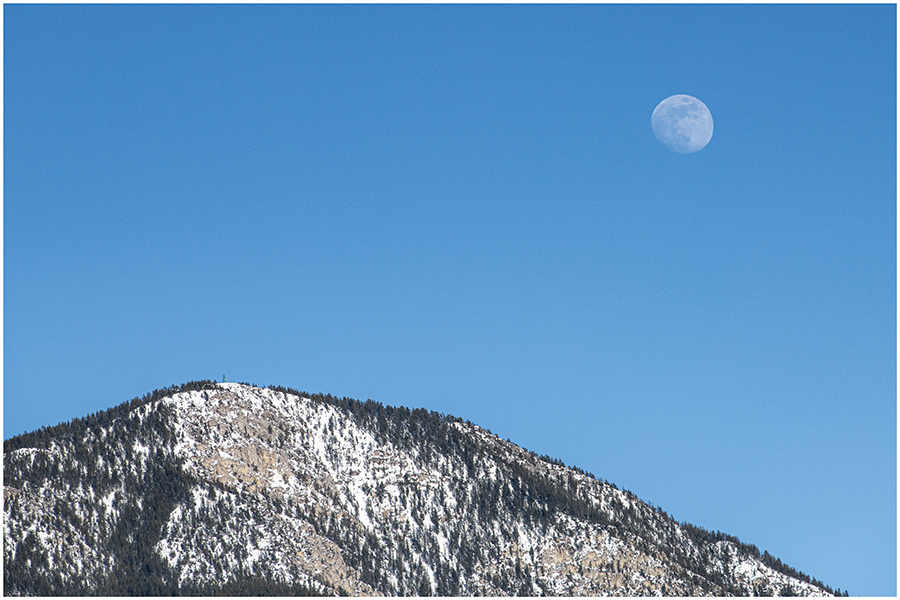
I have included another photo from that night. Photographing the moon can be difficult. If you expose for the moon, the landscape often turns out very dark. If you expose for the landscape, the moon becomes completely blown out. I have always preferred photographing the moon in a blue sky at dusk or dawn. Doing so allows you to choose an exposure that works for everything in the frame.

I try to keep my astrophotography simple. Most of my images are single exposures. Occasionally I will take multiple images to create a panorama when I want to show more of the scene than a single frame can capture.

During this eclipse, however, I did something very common in astrophotography: I took two exposures of the same scene—one exposed for the moon and one for everything else. This allowed me to capture detail in the moon without it being blown out. I achieved this by adjusting the ISO and shutter speed between shots. In Photoshop I stacked the images and used masking to combine the best parts of both exposures. It is a bit of a trick, and I admit I feel somewhat guilty for doing it.

This method is widely used. Photographers often take many exposures of the sky to reduce noise, along with separate exposures for the landscape and the stars. The images are then aligned and processed in Photoshop to create a polished final photograph. The Milky Way can really pop when this technique is used.

However, this approach isn’t really for me—not because I believe there is anything wrong with it, but because it requires more concentration and planning than I enjoy when I’m out photographing. I prefer to roam around with my camera, capturing single shots as I go.

There are also many photographers now using AI in astrophotography. For me, these images are usually easy to spot and make up a large portion of astrophotography found online. They can be striking, and again, there is nothing inherently wrong with these methods. I know of several landscape photographers who place the Milky Way above well-known mountains in directions where the Milky Way never actually appears. The images sell well for them—and why not?

Perhaps it is because I grew up in a newspaper shop that my instinct with photography is to document. I try to make the best photograph I can with the equipment I have, paying attention to composition, colour, and the rule of thirds. But in the end, what I am really trying to capture is a place, a moment in time, and an attitude—something that may not exist in quite the same way in the years ahead.
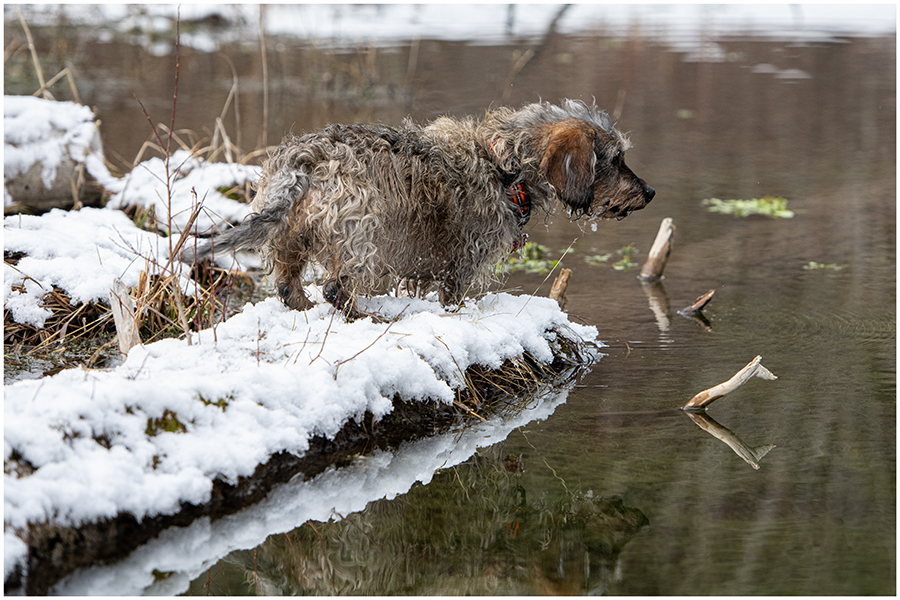
Willow

November 2014 – February 2026

Before Christmas, Willow started coughing. At first, I thought she might have swallowed some water or picked up something she shouldn’t have. But when it didn’t stop, we took her to the vet. An X-ray showed that her heart was very enlarged — so large it nearly filled her entire chest cavity and was pressing against her trachea, which was causing the cough.

The vet prescribed medication, and thankfully the coughing stopped. She seemed to return to her old self.

From the time she was young, though, we were always told she had an irregular heartbeat. Sometimes it beat so lightly that, over time, her heart grew larger. It’s almost funny, everyone who knew Willow always said she had a big heart. In more ways than one, that was true.

Unfortunately, the coughing returned in February. Even then, she still loved her routines; eating well, going for walks, and sitting in front of the fire. During the day she managed quite well, but the nights were harder.

On her last day, she visited all her favourite places. She even barked at her favourite lady at the Tim Horton’s drive-through, and of course, she was rewarded with a Tim Bit.

On February 17th, Willow passed away. She was not in pain. She was in Lisa’s and my arms.

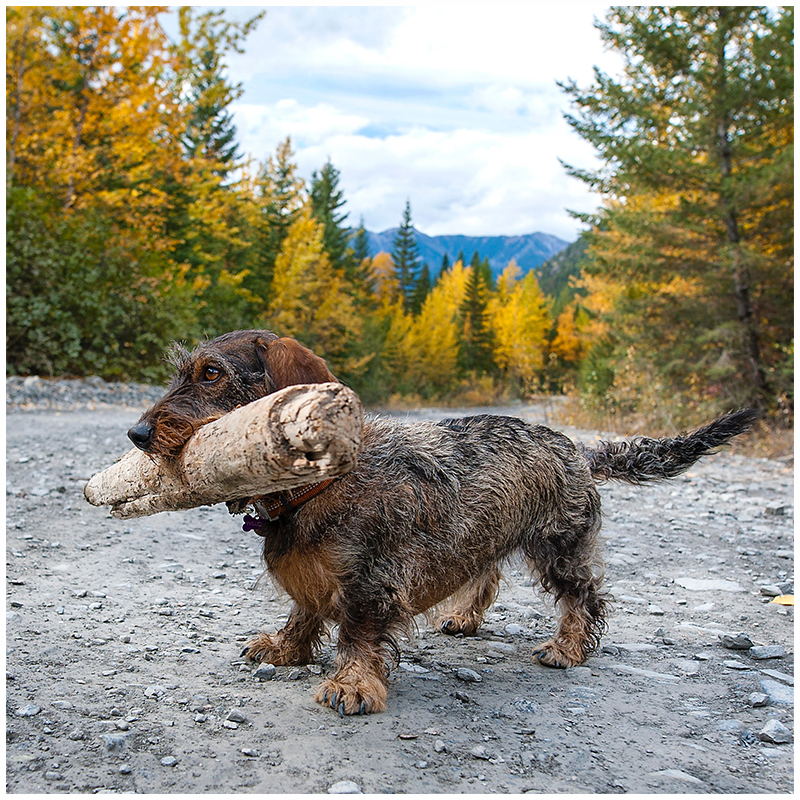
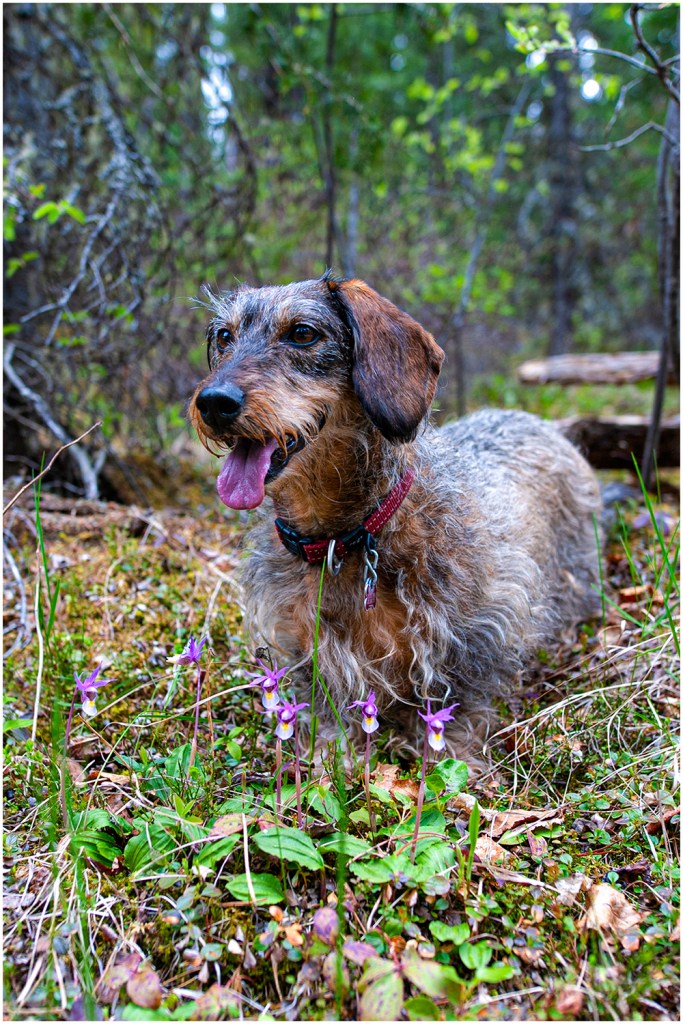
Willow shared so many adventures with us. The mountains feel different now without her. We always had an unspoken agreement to keep each other safe. She took her job seriously, more than once chasing bears up trees, and doing her best to keep flying creatures away (not ideal when you’re trying to photograph them). The Wire-Haired Dachshund is known as courageous, intelligent, stubborn and loving. Willow was had all of these traits. She could also be funny and seemed to take joy in making her people laugh.

During the Olympics there was a commercial featuring an AI figure-skating bear. Every time it came on, Willow, even though she wasn’t feeling good, would leap up, run to the television, and bark.

Willow gave us everything she had for eleven wonderful years. We are all going to miss her. It’s going to be hard without her.

Friends

Dog, departed companion
I told you that the sky would fall in
and it did. How will we see each other again
when we’re without eyes? We’ll figure it out
as we used to when you led me back
to the cabin in the bush in the dark.

Jim Harrison

Willow with her winter coat. February 2026.

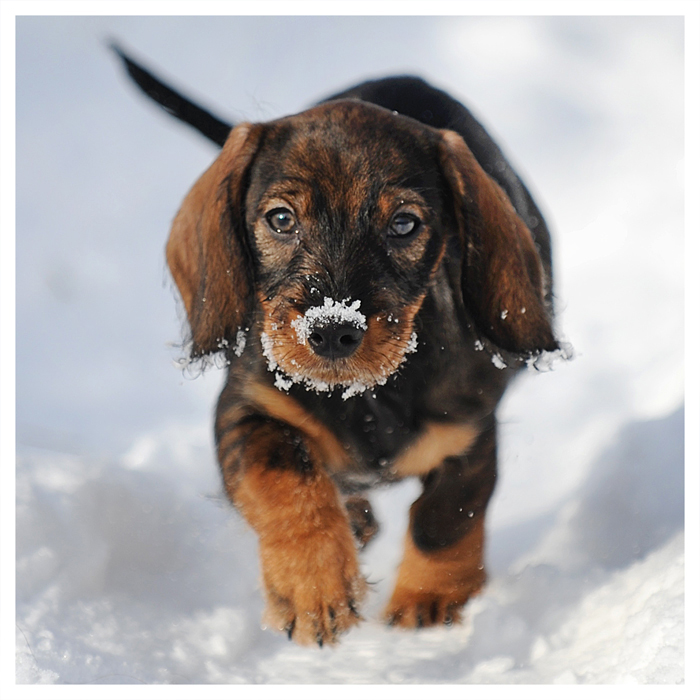
The Big Little Dog.

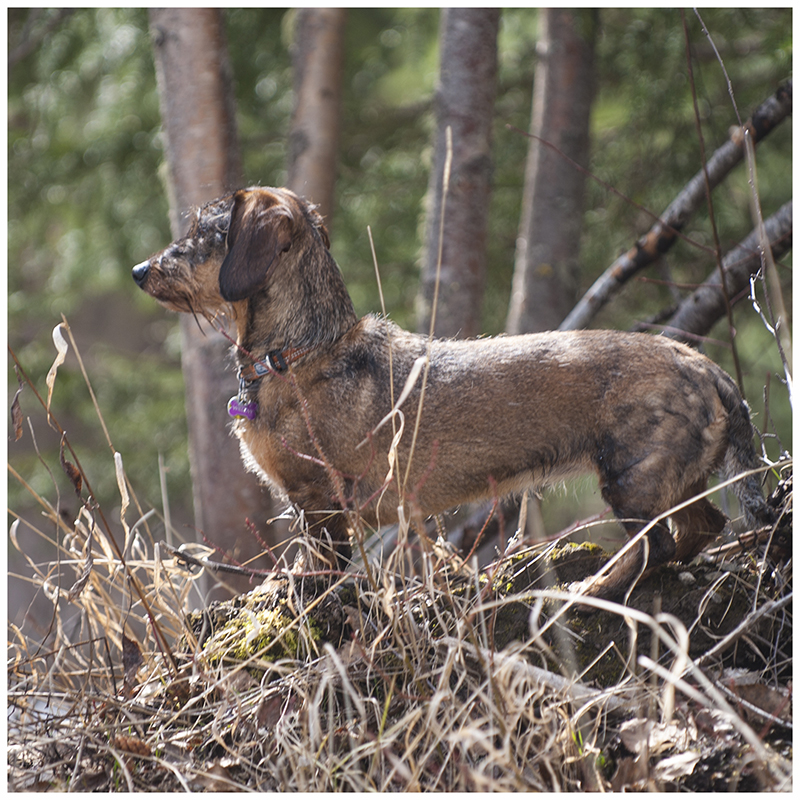
Tracking.

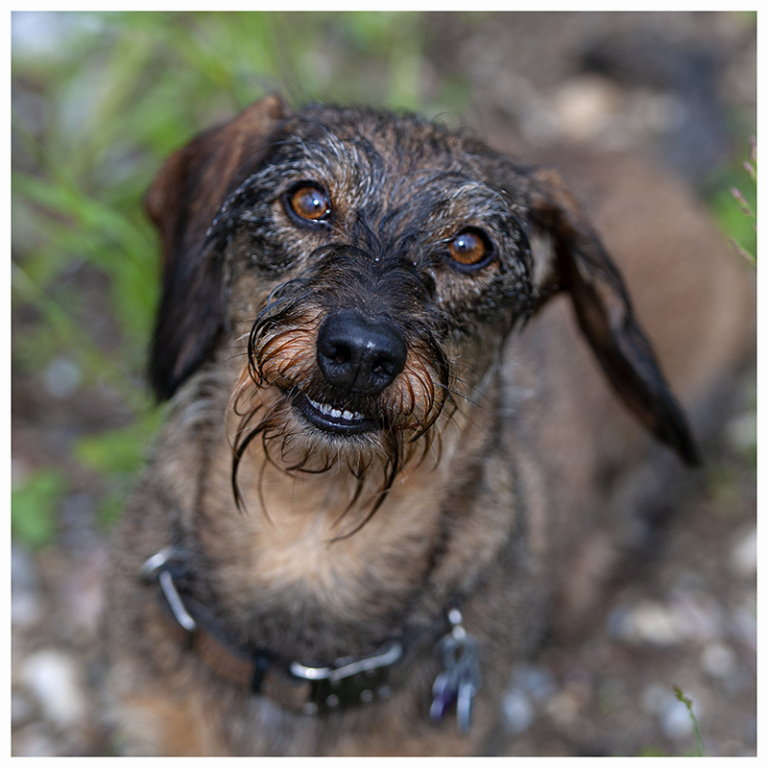
Summer coat.

The Line Up

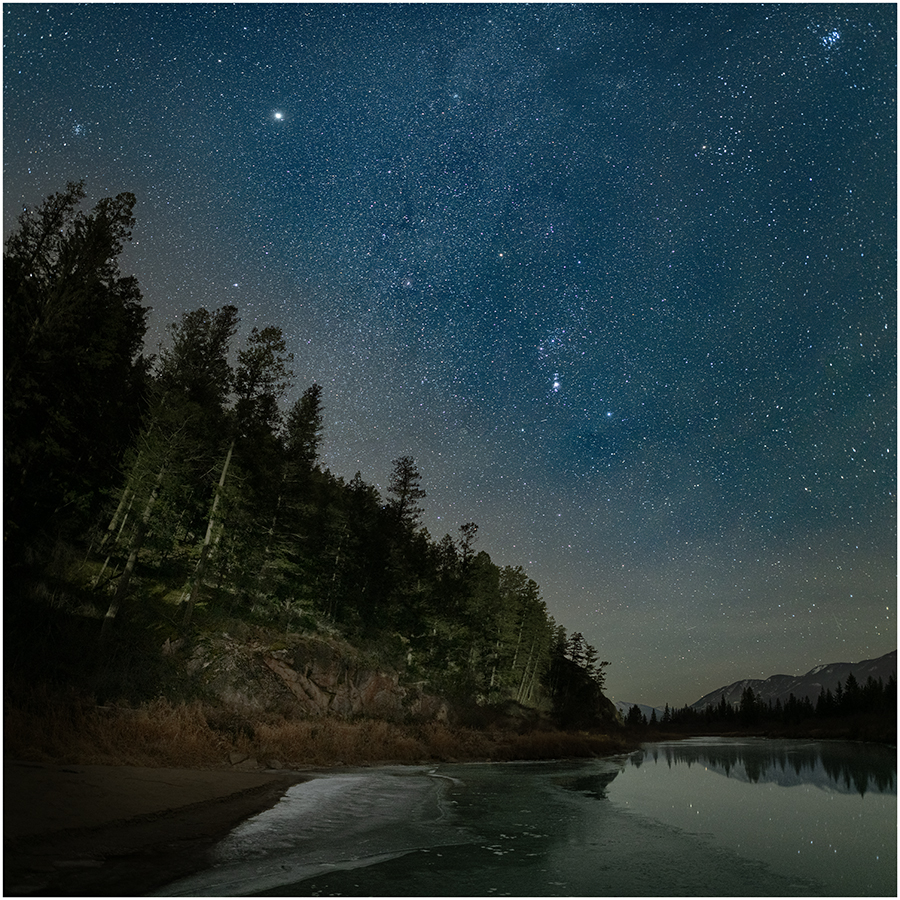
There is a line up of planets worth taking a look for. I knew it would be very unlikely to see them from our spot on Earth. The mountains get in the way and it would be light. Still you won’t see them if you don’t try. I was hoping to get Venus, Mercury and Saturn in one shot. Unfortunately I was only able to see Saturn in the twilight with Venus and Mercury already below the mountains. I might give it another try tomorrow. I did get a good look at the waxing moon, Orion and Jupiter. Very bright twinkling Sirius, reminded me of Willow absent on this walk above the river with the geese honking below.

Flying By

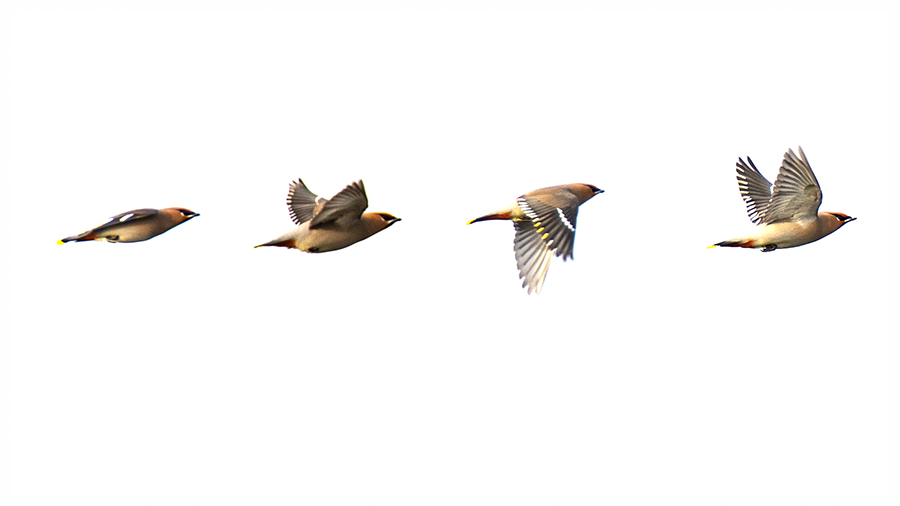
Bohemian Waxwings.

We missed a good episode of Auroras a few days ago. Lots of cloud cover. It has cooled off a little, but not enough to clear the skies. The snow has melted in the valley bottom and everything looks grey and dusty in the lengthening day.

Hard to believe we are almost a month into 2026.

Travelling Riverside Blues.

A Cold Warm

Winter tree.

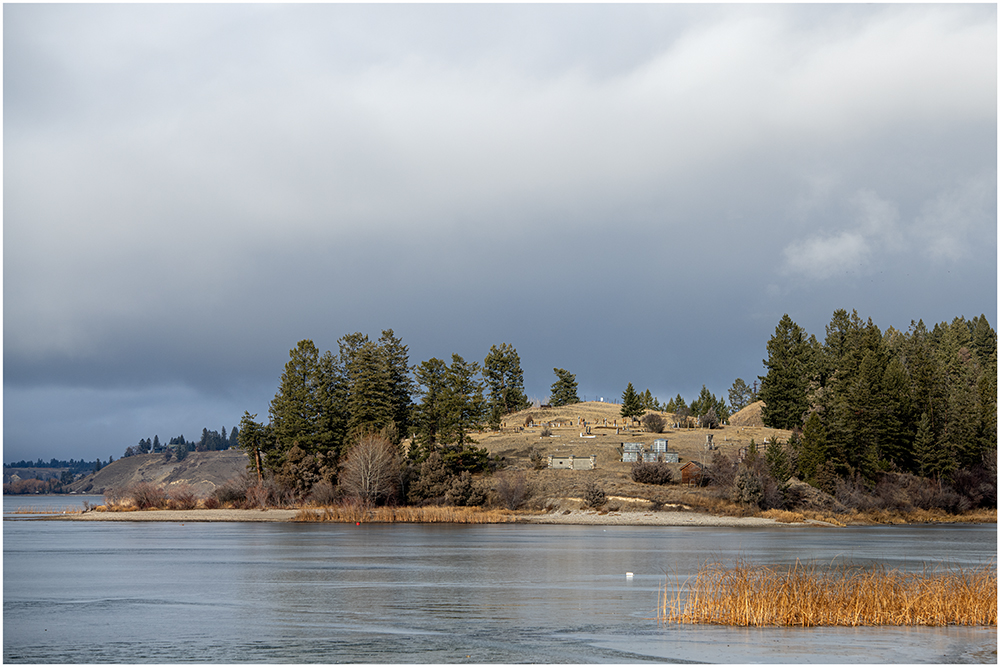
Rain in the valley bottom. I was sure the lake was going to go back out. It hung in there but the ice is thin.

Lisa and I headed into the mountains yesterday. when we started heading up the rain turned to snow and covered the trees and turned it into a winter wonderland. Willow chased snowballs and looked a little like a snowball herself.

Today I went back up and the snow had turned back to rain. The snow covered trees had shed their layer of white. It was foggy as temperatures adjusted. It has been a very mild winter so far.

Bohemian Waxwing.

We headed for the lake and ran into a flock of waxwings looking happy. Somewhere along the way Willow decided to roll in what I believe was goose shit. The warm weather has revealed smells for her to discover.

Back when I was a kid if our dog rolled in something they weren’t allowed in the house. They had to stay outside day and night until they were deemed fit to come back inside. I mentioned this to Lisa but she didn’t think this would be fair to Willow. Instead she said I should give her a bath and told me Willow’s shampoo is in the left drawer of the bathroom cabinet.

The Ol’ Boneyard.

The bathroom cabinet is under the sink. It has 2 drawers and 3 cupboards. I realized then, as it had never occurred to me, Willow and I share one small drawer in the bathroom. Shampoo, tick repellant, cider vinegar for skunk smell and a couple razors. The rest of the cabinet is for Lisa’s stuff. I mentioned this to her and she said, you two are low maintenance.

It’s bound to get cold sometime. I wish it would hurry up. This mild wet weather always makes a body feel cold. A warm cold.

CME

Clouds catching last nights auroras make for an unsettling sky.

The sun has been very active with many coronal holes or sunspots stretched across its equator.

Several of these coronal mass ejections hit earths magnetosphere last night, causing aurora that could be seen into the southern United States.

Here it was cloudy but it is always worth a look. Willow and I took off for the creek and followed it around to the backside of the mountain. We walked to the bottom of Lisa’s trees.

It had rained, and was muddy and slippery hoovering around freezing. The cloud covered sky was odd looking, bruised in places, glowing here and there. I could tell something was going on above the clouds. We walked around, Willow seemed equally taken back not making a peep. We waited around peering above the trees until I was sufficiently damp and cold.

Today, the truck is covered in mud, especially where Willow sits. She is close to the ground and acts like a shaggy mop head in such weather. Reports say it was a fantastic display of Aurora, seen as far south as Florida. Tonight could be the same. It is still cloudy without promise of letting up. Willow and I will probably stay in close to the fireplace.

Remembrance

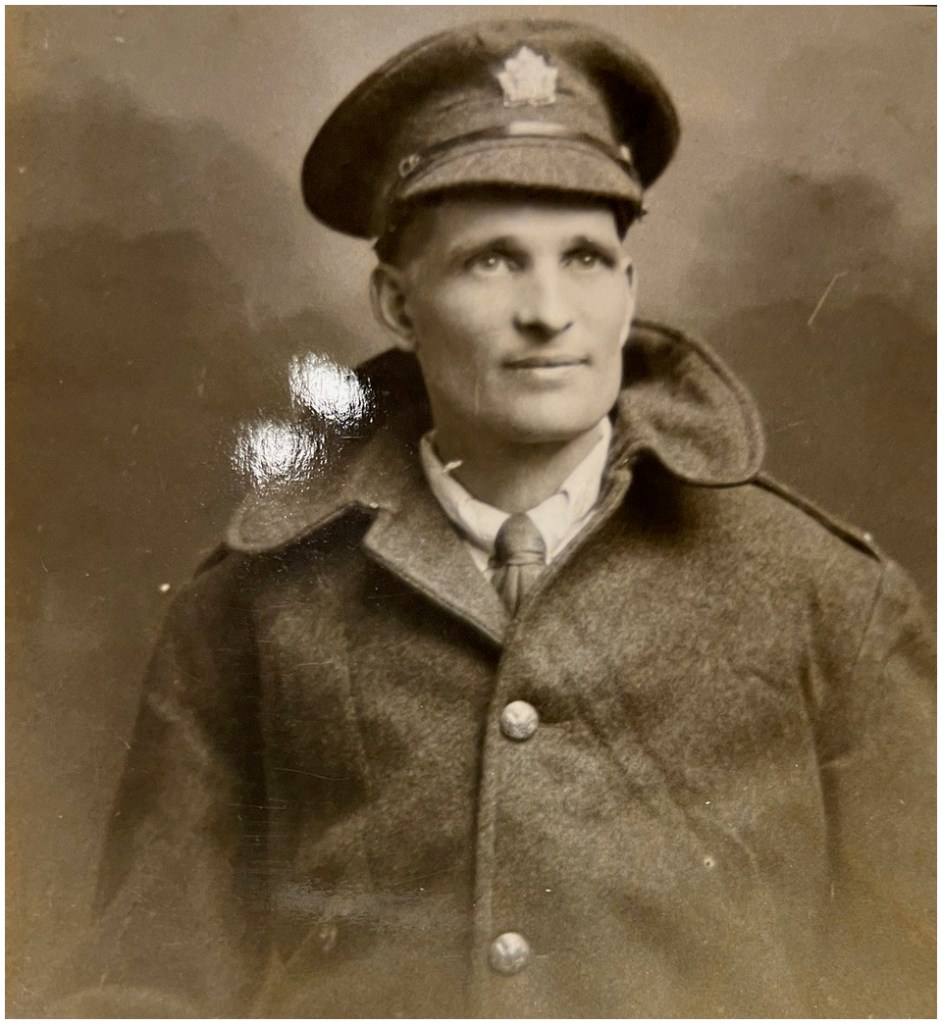
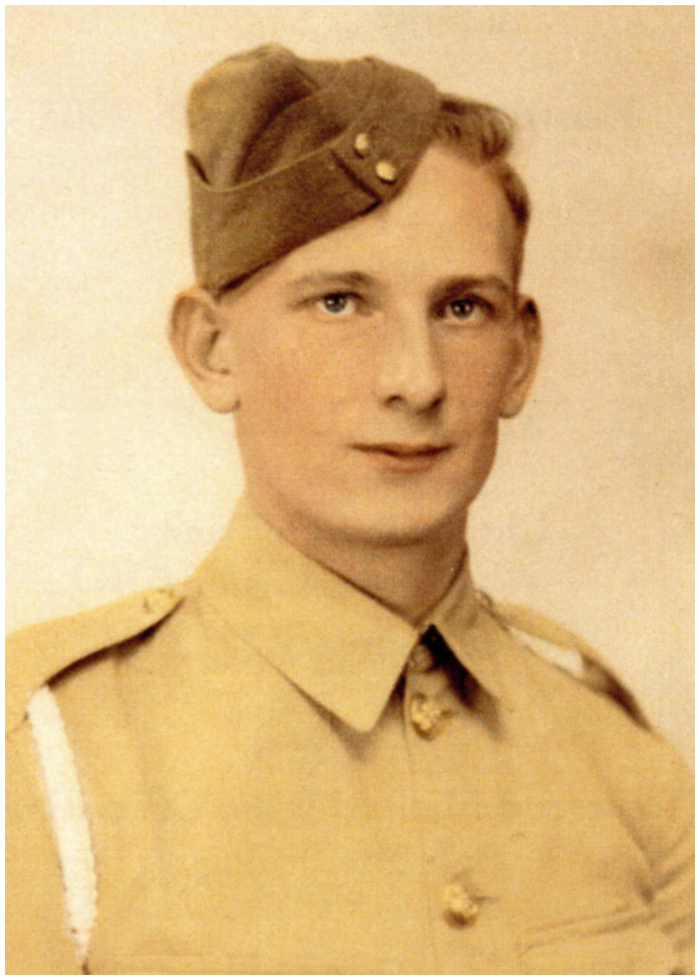
A few months ago, my sister Deb was contacted by a teacher in Liphook, England, seeking information about our grandfather and father, both of whom were born there. The teacher’s class is researching soldiers from Liphook who immigrated to Canada and served in the First and Second World Wars.

What a treat to hear back from the teacher with a write up about the research and the presentation given to the Royal Highness the Princess Royal.

***

Dapper

Ernest (Dapper) Ede came to Canada in 1912. He enlisted with the Canadian Army’s Fifty-Fourth Battalion in World War One and was wounded in Passchendaele. This landed him an extended time in hospital in England. During this time he married a nurse named Winnifred, our grandmother. They returned to Canada in 1923 to homestead in Windermere, British Columbia. Dapper died in 1972.

Ron

Ronald Ede was born in England in 1923 and arrived in Canada a few months later. At 17 he enlisted, becoming a member of the elite First Special Service Corps – the Devil’s Brigade. During World War Two he met Isabelle and they were married shortly there after and before being shipped overseas. After the war Ronald became a Linotype operator and worked for The Hamilton Spector and The Calgary Herald before returning to Windermere to manage and eventually own, along with Isabelle, The Lake Windermere Valley Echo. Dad died in Invermere in 2003.

***

Dapper and Ron would have been so proud to have been included in the presentation given by the students of Liphook C.of.E Junior School. Our heartfelt thanks to teacher Jenny Brown for such a special gift of Remembrance.

This is the link to the article that also includes photos and a video.

https://www.portsmouth.anglican.org/news/2025/06/25/royal-presence-pupils-pay-canada-day-tribute/

Fading

Comet Lemmon, you are going to have to take my word for it!

C/2025 A6 (Lemmon) is quickly fading from view. Since it was clear Willow and I thought we would give it one more go to spot it.

This time I took my 20mm wide angle lens knowing that if the comet could be seen it would appear very small in the photos. This is the lens I am most comfortable using for night photography because it gives such a large view of the sky. It also allows me longer exposures before the stars streak.

The sun went down and the full moon came up behind us. It dipped quickly to -4°c, which felt chilly. I am going to have to toughen up if I plan on making it through winter. We walked around where Slinky and Ara are buried. It is truly a beautiful spot. As the sky turned blue and darkened we spotted flashes of white as we jumped several White Tailed Deer. They were quick not to stick around. It reminded me of hunting with Dad. Seeing the best game when it was too dark to shoot. Both because you couldn’t see the far sight on the rifle, and more importantly, it’s against regulations.

The full moon illuminated the mountainside. Only the brightest stars could be seen. Of course, the moon also washed away the comet. Still I had faith and pointed the camera in the general direction of where it should be.

Moonlit night.

Both Willow and I were glad to get back to the warmth of the truck. We picked our way along the back rounds, through frozen puddles, staying the best we could above the ruts. Such a pleasure in my life to putter along old and overgrown roads. I used to do it with a beer in my right hand, now it’s a coffee if anything. We stopped at the lake. It was calm and the moonlight reflected the mountains. I listened for fish jumping. Willow heard something and gave a bark. Her echo barked back at her and then the barking match was on. Willow looked at me seriously, ‘there is another dog out here’.

Time to head back to the valley bottom and the warmth of bed.

An enlargement of the top photo. Due to moonlight, even blown up, Comet Lemmon is hard to spot.

Comet Hunting

Tried to peek through the clouds to get a glimpse at Comet Lemmon. It hasn’t been easy with clouds rolling in just as it’s been getting dark, however thought I’d give it a try regardless. You’ll never catch fish if you don’t put your line in the water.

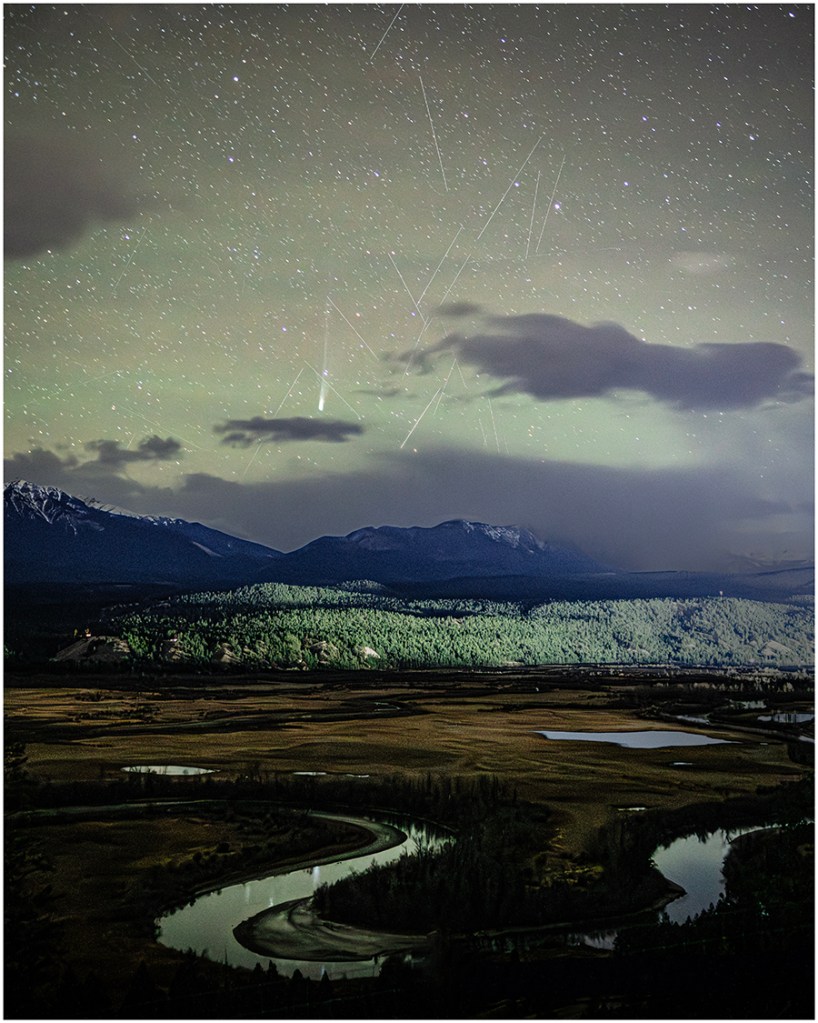
As the clouds parted I was able to easily see the comets nucleus. In the photo you can even see it reflected in the river. The tail was harder to see. The camera picked it up nicely even amongst the light pollution of the Village of Radium Hot Springs.

Just a word about light pollution; it was interesting to have been in Waterton recently and saw how they have tried to limit light pollution. They are part of a dark sky reserve and it is important to them. In the Windermere Valley light pollution gets brought up occasionally but never gets much traction. The only way it ever will is by showing decision makers that there is some profit in shining lights down. That is a tough sell in a valley growing as fast as this one.

Speaking of pollution, notice the ‘scratches’ in the sky around Comet Lemmon. These are Starlink satellites. It is amazing and annoying how many are in low orbit around the earth. It is almost impossible to look into a darkened sky without seeing them now. This is only going to get worse as Starlink continues to launch thousands more and other countries and companies begin to launch their own version of Starlink.

Without regulations or common sense it may become impossible, in the future, to enjoy the stars, meteor showers and visiting comets, as the night sky fills with streaking satellites. Humans should be ashamed of polluting the atmosphere, oceans, water and land, instead of giving it a second thought, however, we have moved onto corrupting the space and stars above us.

I would still like to get a better look at Comet Lemmon, but my chances are limited as it gets closer to the sun and our weather fails to improve.

C/2025 A6 Lemmon

Comet Lemmon (upper left) seemingly following the same trajectory as a satellite.

Nice brisk morning at -6°c. Willow and I went out at about 5:30. It was just starting to lighten around the mountains in the east. The waning moon was bright to the southeast. I pointed the camera in the direction of where Comet Lemmon should be located as I wasn’t able to spot it with my naked eye. Later when I was home I was able to easily locate it on the downloaded photos. Now that I know where to look it will be easy to spot next time out. And it should get brighter!

Comet Lemmon in relation to the Big Dipper.