Comet & Satellites

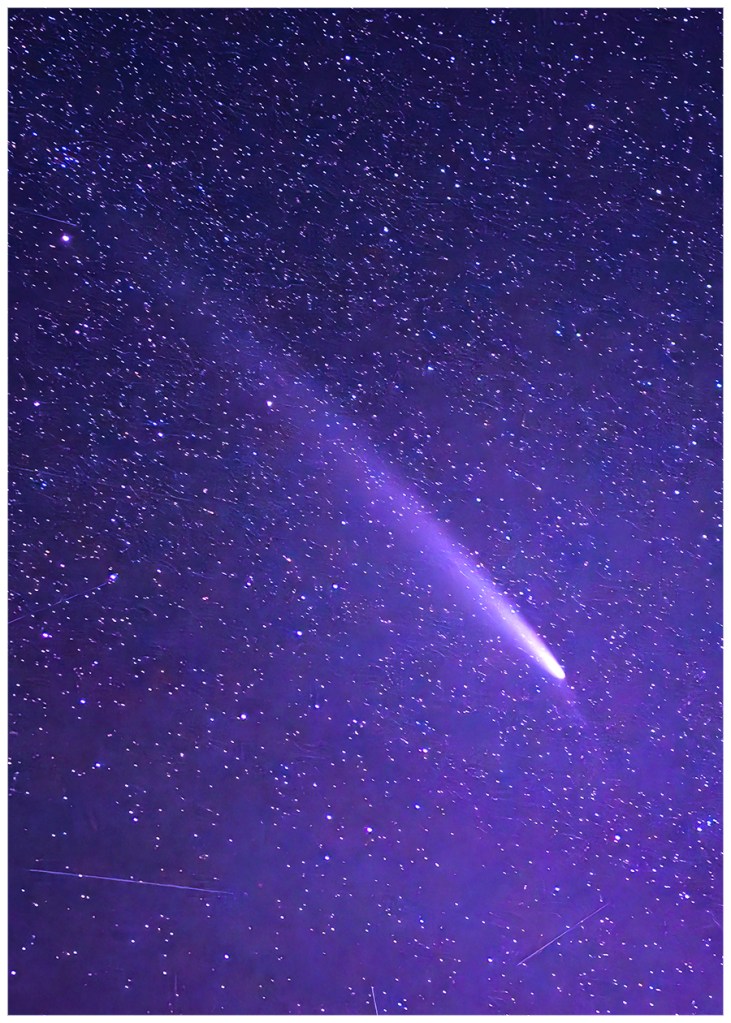
This is a closeup of the comet from a couple of nights ago. It is not taken with a telephoto lens. That would require a piece of equipment that tracks the sky which I don’t have. Instead it is taken with a 55mm lens and cropped tight.

Amazingly, 10 satellites can be seen in this photo of a small piece of the sky. You may not be able to see them depending on what computer or phone you are reading this post.

Most of the satellites are Space X communication satellites. It is amazing how many more there are than only a few years ago.There is something about them, that I can’t put my finger on that makes me uneasy. When I see so many it makes me think the world is going down the shitter. I don’t know why I have this feeling.
Another Try

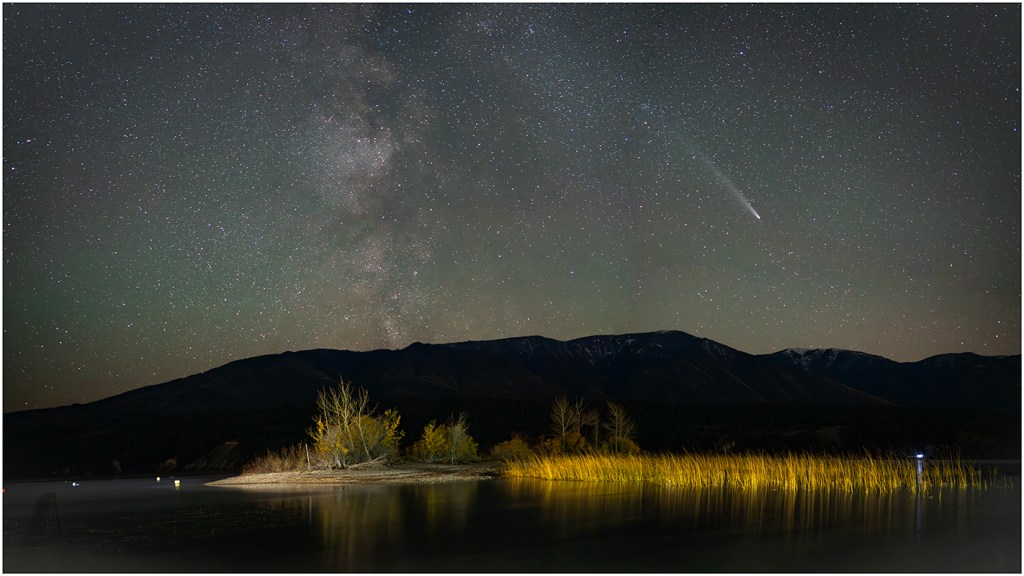
Comet Tsuchinshan-ATLAS is seen to the right of The Milky Way.

Stayed up past bedtime for another crack at seeing Comet Tsuchinshan-ATLAS. It was more difficult to pick out, but with a little squinting I found it in a much higher position than the last time we spotted it. Without dark clear skies it would have been impossible to see.

The comet is racing away from us, back to the Oort Cloud, and getting dimmer and smaller by the day.

I took quite a few photos on different camera settings. Once I go through them I will share more here. The photo above is a panorama of six shots stitched in Adobe Lightroom. It was taken on a much higher ISO than I usually use for astrophotography, but was necessary with the lens I was using. Well worth losing some sleep over.

Comet Tsuchinshan-ATLAS

The tail of Comet Tsuchinshan-ATLAS extends above the cloud cover.

We have been battling the clouds but was able to get one picture of the comet tonight. It is not the greatest picture due to having my camera set wrong. It does show its long spectacular tail.

Comet Tsuchinshan-ATLAS is rising in the sky, providing we get some clear skies there should be more opportunities to see it.

It will be very interesting to see how it interacts with the waxing moon.

Comet

Comet Tsuchinshan-ATLAS has now emerged from the glare of the sun to become an evening comet.

Once again it was Lisa’s eagle eyes that was able to spot it just as we were about to give up. From our vantage point it was beside Mt. Nelson.

The photo was taken with a very wide angle lens, the same one I used to take the auroras, and the crop is a small part of the frame. If it is clear tomorrow evening I may give it another try with a lens that will make it appear closer.

It is always rewarding to spot comets, they are often a challenge. Comet Tsuchinshan-ATLAS may become easier to see as it rises into a darker sky. As it does, however it will quickly fade as it moves further away from earth on its journey back to the Oort Cloud. In 80 thousand years it will return.